
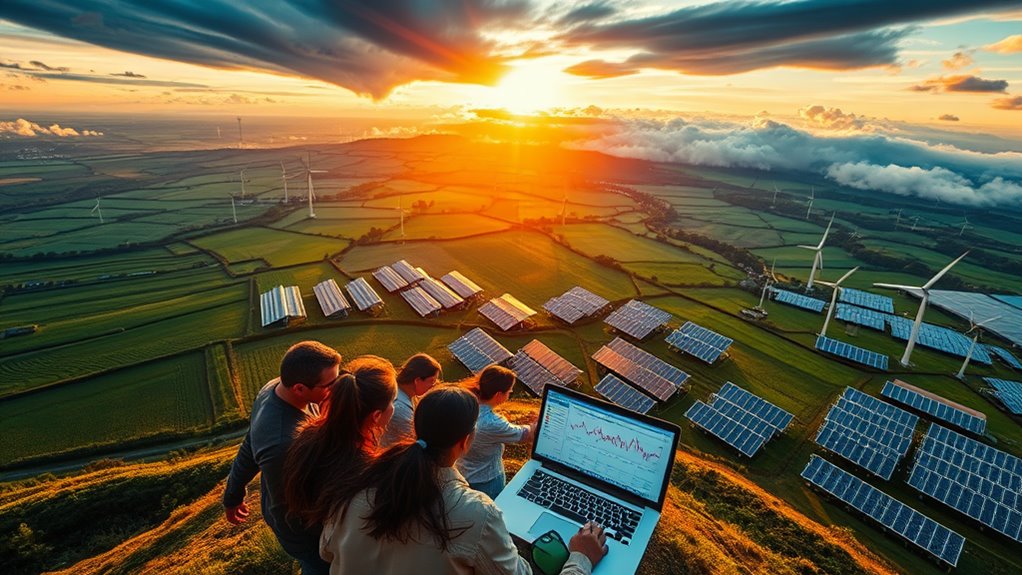
AI holds tremendous potential in tackling climate change challenges. By analyzing complex datasets, it helps predict climate scenarios and monitor ecosystem health. You can utilize AI for optimizing renewable energy production and improving agricultural practices, making them more efficient. Furthermore, AI aids in real-time disaster response, ensuring timely resource delivery and effective communication. Its use in carbon capture and habitat assessment is vital for sustainable development. Engaging with AI solutions promotes equitable climate strategies, benefiting vulnerable communities. If you want to uncover more about how AI can transform our environment, there's plenty more to explore.
Understanding Climate Change Challenges
When you look at the pressing challenges of climate change, it's clear that the stakes are incredibly high. You're faced with an urgent need to understand how climate policy shapes our world and how it can drive real change. The rising levels of greenhouse gases are not just numbers; they represent a direct threat to your freedom and the well-being of future generations. Achieving climate justice means fighting for equitable solutions that address the needs of the most vulnerable communities in our society.
Urban resilience is crucial as cities grapple with the effects of climate change. You can advocate for sustainable development practices that reduce your ecological footprint and promote emission reduction strategies. Every choice counts, from supporting local initiatives to engaging in community planning that prioritizes green spaces and biodiversity.
Moreover, climate adaptation is fundamental in preparing for the inevitable changes ahead. By investing in environmental education, you empower yourself and others to make informed decisions that contribute to a healthier planet. This education nurtures a sense of responsibility, urging you to take action against biodiversity loss and the degradation of ecosystems that support life.
As you navigate these challenges, keep in mind that change starts with you. Your voice, your actions, and your commitment to these principles can lead to meaningful progress. Together, we can challenge the status quo, advocate for robust climate policies, and build a future that honors the balance of nature and human freedom.
The Role of AI in Environmental Science
AI is transforming environmental science by enhancing data analysis techniques that help you interpret complex datasets. With predictive modeling applications, you can forecast potential climate scenarios and their impacts on ecosystems. Moreover, AI tools enable you to monitor ecosystem changes in real-time, providing critical insights for conservation efforts.
Data Analysis Techniques
In the domain of environmental science, data analysis techniques driven by artificial intelligence are transforming how researchers tackle climate change. You can leverage machine learning algorithms to sift through vast amounts of climate data, uncovering patterns and insights that would otherwise remain hidden. This not only accelerates the research process but likewise empowers you to make informed decisions based on real-time analysis.
Data visualization plays an essential role here, turning complex datasets into accessible graphics. When you visualize data, it becomes easier to grasp intricate relationships, trends, and anomalies, facilitating communication with stakeholders and the public. By employing AI-driven visualization tools, you can present your findings in compelling ways that resonate with diverse audiences.
Moreover, machine learning models improve your ability to identify correlations between human activities and environmental changes. This insight enables you to advocate for policies that promote sustainability and resilience. Embracing these modern data analysis techniques not only positions you at the forefront of climate science but additionally gives you the freedom to explore innovative solutions that can lead to a healthier planet. Your engagement with AI in this capacity can truly make a difference.
Predictive Modeling Applications
Predictive modeling applications are revolutionizing how you approach environmental challenges by anticipating future climate conditions and impacts. By utilizing advanced algorithms, you can conduct thorough climate risk assessments that inform adaptive management strategies. These models help you evaluate ecosystem service valuation, ensuring that natural resources are managed sustainably.
For urban environments, predictive modeling aids in urban heat mitigation, allowing you to plan for cooler, more livable cities. Biodiversity forecasting helps you understand species distribution changes, guiding conservation efforts effectively. You can likewise leverage climate finance analytics to optimize funding for projects that improve climate resilience planning.
Furthermore, policy impact modeling provides insights into the potential effects of new regulations or initiatives, enabling you to advocate for environmental justice frameworks that prioritize equitable solutions. By incorporating sustainable transportation solutions into your models, you can promote cleaner, more efficient transit options.
In this way, predictive modeling empowers you to make informed decisions and drive impactful change, ensuring a sustainable future for all. Embrace these tools to navigate the intricacies of climate change and cultivate a resilient environment.
Monitoring Ecosystem Changes
As you utilize predictive modeling to anticipate climate impacts, monitoring ecosystem changes becomes fundamental for maintaining ecological balance. AI plays a significant role in this process, helping you assess ecosystem health and track biodiversity. With advancements in environmental sensors and remote sensing technology, you can conduct thorough habitat assessments and monitor species tracking more accurately than ever.
These tools allow you to measure habitat degradation and the ecological footprint of land use changes, giving you insights into biotic interactions and soil health. By leveraging AI for biodiversity monitoring, you can identify shifts in ecosystems and respond proactively. This empowers you to contribute to ecosystem restoration and wildlife conservation efforts, enhancing climate resilience.
AI likewise aids in carbon sequestration analysis, helping you understand how ecosystems absorb carbon and mitigate climate change. The integration of AI into these practices guarantees that you stay informed about the critical indicators of ecosystem health, allowing you to make data-driven decisions that promote sustainability.
In this way, you can take meaningful steps in safeguarding our environment, guaranteeing that future generations enjoy the freedom of a thriving planet.
AI for Renewable Energy Optimization
Utilizing the strength of artificial intelligence in renewable energy optimization can greatly improve efficiency and reduce waste. By leveraging AI technologies, you can improve renewable energy forecasts, enabling you to predict energy production more accurately. This foresight directly impacts smart grid optimization, allowing for a more responsive and adaptable energy system.
You'll find that comprehending energy consumption patterns is essential. With AI, you can analyze historical data and current trends, leading to smarter demand response strategies that align with your energy needs. For instance, optimizing solar panel efficiency through AI-driven insights can maximize the energy harvested, whereas wind farm analytics can guarantee turbines operate at their peak performance.
Advanced energy storage solutions play a significant role too. AI can help you manage battery technology advancements, assuring that energy gets stored and released when it's most needed. This not only supports grid resilience planning but additionally helps maintain a steady supply, even during peak demand times.
As you embrace these innovations, you contribute to the clean energy shift, paving the way for a sustainable future. By optimizing renewable energy resources with AI, you're not merely cutting down waste; you're empowering yourself and your community to thrive in a world driven by clean energy. The potential is limitless, and the freedom that comes with it is something you won't want to miss out on.
Predictive Analytics for Weather Patterns
When you think about predictive analytics for weather patterns, you realize how essential data-driven forecasting is for comprehending climate changes. By employing advanced simulation models, you can better grasp the potential impacts of various climate scenarios. This knowledge empowers you to make informed decisions that can help mitigate climate-related challenges.
Data-Driven Weather Forecasting
Accuracy in weather forecasting has transformed greatly thanks to data-driven approaches that utilize predictive analytics. You can now leverage advanced techniques like climate data aggregation and machine learning algorithms to predict weather patterns more effectively. By employing real-time analytics, you gain immediate insights into changing conditions, enabling quicker responses to extreme weather events.
Satellite imagery analysis plays a significant role in this process, allowing you to visualize atmospheric changes in stunning detail. When you combine this with historical weather comparisons, you can improve predictive accuracy enhancements, spotting trends that might otherwise go unnoticed. Climate pattern recognition is vital, as it helps you identify recurring phenomena that affect your local environment.
Moreover, AI model training is fundamental for refining your forecasting tools. It sharpens their ability to detect weather anomalies, ensuring you stay ahead of unpredictable shifts. Finally, utilizing data visualization techniques makes it easier for you to interpret complex data, providing a clear picture of forthcoming weather developments. With these advancements, you'll feel more empowered and informed, ready to tackle the challenges posed by our ever-changing climate.
Climate Impact Simulation Models
Climate impact simulation models are revolutionizing how you comprehend and predict weather patterns, with advanced predictive analytics at their core. These models enable robust climate scenario analysis, allowing you to investigate various future conditions and their potential impacts. By employing model validation techniques, you guarantee the accuracy and reliability of your predictions, as uncertainty quantification helps you grasp the risks involved.
As you explore temporal resolution improvement, you can capture changes over time more effectively, and with spatial data integration, you'll consider geographical variations that influence local climates. Engaging stakeholders through effective strategies nurtures collaboration, guaranteeing diverse perspectives shape the models. Feedback loop mechanisms help refine your comprehension by continuously incorporating new data and insights.
However, you might face model interpretability challenges, as complex algorithms can obscure underlying assumptions. Addressing this requires interdisciplinary collaboration, where experts from various fields work together to create clearer frameworks. Scenario planning frameworks guide your decision-making, allowing you to navigate uncertainties with greater confidence. By embracing these advanced simulation models, you empower yourself to contribute meaningfully to climate solutions and promote a sustainable future.
AI in Carbon Capture Technologies
Carbon capture technologies have gained considerable attention as an essential tool in the fight against greenhouse gas emissions, and AI is playing a key role in improving their efficiency and effectiveness. By integrating machine learning and advanced data analytics, you can optimize carbon capture processes, making them more adaptable and responsive to varying conditions. This isn't just about capturing CO2; it's about leveraging AI efficiency to innovate and refine sustainability practices.
With technology advancements in AI, you're witnessing breakthroughs in real-time monitoring and predictive analytics that help identify the most effective carbon capture methods. These innovations are fundamental for maximizing greenhouse gas reduction efforts. Envision having the ability to process vast amounts of data, pinpointing which strategies yield the best results in carbon utilization.
Furthermore, AI's ability to integrate various data sources allows for a thorough comprehension of environmental impact. You can better assess how different carbon capture techniques perform under specific conditions, ensuring that your approach is not only effective but also sustainable in the long run.
Through innovative strategies, AI empowers you to make informed decisions that improve carbon capture technologies. By embracing these advancements, you're contributing to a future where carbon emissions are considerably reduced, and sustainable practices are the norm. The potential of AI in this field is immense, and as you explore these solutions, you're taking an essential step toward a healthier planet.
Enhancing Climate Modeling With AI
Many researchers are utilizing AI to improve climate modeling, making predictions more precise and reliable. By utilizing advanced AI algorithms, you can analyze complex climate variables with greater efficiency. This impactful technology enables seamless data integration from diverse sources, allowing you to create holistic models that capture the intricacies of our planet's systems.
With machine learning techniques, you can improve simulation accuracy during reducing computational demands. These AI-driven models can run multiple scenario analyses, quickly evaluating how different variables interact under various conditions. This rapid analysis not only accelerates the development of climate solutions but equally enables you to make informed decisions based on real-time data.
Model validation is essential, and AI helps you quantify uncertainty in your predictions, providing a clearer picture of potential outcomes. Comprehending feedback loops in climate systems becomes more manageable when you leverage AI's analytical prowess. By identifying these loops, you can better predict how changes in one variable might ripple through the entire system, enabling more effective climate strategies.
Embracing AI in climate modeling isn't just about improving accuracy; it's about nurturing a deeper comprehension of the world around you. As you tap into the potential of AI, you'll find yourself equipped to tackle the challenges posed by climate change, driving innovation and promoting resilience. The future is in your hands—let AI guide you toward solutions that can truly make a difference.
Smart Agriculture and AI Solutions
Utilizing AI technology doesn't stop at climate modeling; it extends into the realm of agriculture, transforming how we grow food and manage resources. With precision farming, you can maximize every inch of your land, guaranteeing efficient resource management that boosts your yields while minimizing waste. AI-driven crop monitoring tools allow you to assess soil health in real-time, giving you insights that help you make informed decisions about what to plant and when.
Yield prediction algorithms analyze various factors like weather patterns and soil conditions, enabling you to anticipate challenges and adapt your strategies accordingly. This proactive approach not only improves productivity but also supports sustainable practices that protect our environment. Regarding pest control, AI systems can identify infestations early, allowing you to apply targeted treatments that reduce chemical use and promote biodiversity.
Greenhouse automation further exemplifies AI's potential, as sensors and data analytics create ideal growing conditions customized to each plant's needs. This level of precision guarantees you're not just growing food; you're cultivating a resilient system that can weather the storms of climate change.
In a world where food security is paramount, embracing AI in agriculture empowers you to take control of your food production. By integrating these advanced technologies, you're not just farming; you're pioneering a future where freedom from food scarcity becomes a reality. With AI by your side, the possibilities for a sustainable agricultural environment are limitless.
AI for Disaster Response and Management
AI is revolutionizing disaster response and management, providing critical support in times of crisis. With its ability to improve AI logistics, you can streamline operations during emergencies, guaranteeing that resources reach those in need without delay. Envision a world where emergency communication systems are more efficient, allowing you to receive real-time updates and alerts about impending disasters.
Through real-time monitoring, AI can analyze vast amounts of data, helping you assess risks and make informed decisions swiftly. This capability enables better resource allocation, guaranteeing that crucial supplies and personnel are deployed where they're needed most. In this way, communities can respond effectively, minimizing chaos and saving lives.
Moreover, predictive maintenance allows for the preemptive identification of potential failures in infrastructure, so you can address issues before they escalate into crises. Training simulations driven by AI can prepare responders, engaging them in realistic scenarios that hone their skills and improve overall preparedness.
Community engagement is important in disaster management, and AI tools can facilitate this by connecting citizens with local resources and response teams. By promoting communication and collaboration, you empower communities to take an active role in their safety.
In embracing AI for disaster response, you're not just adopting technology; you're advocating for a more resilient future. With AI at the forefront, you can guarantee that when disaster strikes, your community is ready to respond effectively and efficiently, safeguarding the freedom and well-being of everyone involved.
Future Trends in AI and Climate Action
As we look ahead to the future, advancements in artificial intelligence are set to play a significant role in climate action strategies. You'll see AI driving sustainable innovation, creating solutions that promote a circular economy while guaranteeing environmental justice. By leveraging green technology, you can help cultivate ecosystem resilience, adapting to the changing climate with agility.
AI ethics must remain at the forefront as we navigate these advancements. It's vital to guarantee that our solutions promote climate equity, empowering marginalized communities often disproportionately affected by climate change. Through community engagement, you can help shape policies that integrate AI in ways that benefit everyone, not merely a select few.
Technological adaptation will be fundamental in enhancing our responses to climate challenges. Envision AI systems that analyze vast amounts of data to identify the most effective strategies for carbon reduction and resource management. This kind of intelligent analysis can inform policy integration, making certain that your local and global initiatives are coherent and impactful.
The future of AI in climate action isn't just about technology; it's about creating a more just and equitable world. As you embrace these trends, consider how they can amplify your efforts in fighting climate change. Together, we can leverage AI to not only protect our planet but likewise to guarantee freedom and fairness for all, paving the way for a sustainable future that benefits everyone.
Frequently Asked Questions
How Can AI Help Individuals Combat Climate Change at Home?
What if you could make a real difference at home without sacrificing comfort? With AI, you can boost your energy efficiency and cut down on waste. Envision your smart home adjusting temperatures based on your routines as it tracks your personal carbon footprint. You'll discover sustainable habits that fit seamlessly into your life, making eco-friendly choices easier than ever. It's not just about saving the planet; it's about enjoying your freedom to live sustainably!
What Are the Ethical Concerns of Using AI in Climate Solutions?
When considering the ethical concerns of using AI in climate solutions, you've got to think about data privacy and algorithmic bias. It's vital to guarantee accountability frameworks are in place to avoid misuse. You should likewise prioritize stakeholder engagement to give everyone a voice. Transparency issues can affect trust, so decision-making ethics must be clear. Balancing these factors helps create a fair system that respects individual freedoms during addressing climate challenges.
How Does AI Impact Climate Change Education and Awareness?
Did you know that 72% of people feel more informed about climate issues through interactive learning? AI tools improve climate change education by fueling engaging awareness campaigns and providing innovative educational resources. They facilitate community engagement, allowing you to visualize data in impactful ways. With AI's ability to create interactive learning experiences, you can grasp complex concepts easily, sparking a desire for freedom through informed action in the fight against climate change.
Can AI Contribute to Climate Policy Development and Governance?
Absolutely, AI can greatly contribute to climate policy development and governance. By utilizing predictive modeling, you can anticipate future climate scenarios and their impacts. This allows for data-driven decision making, ensuring policies are based on solid evidence rather than guesswork. With AI, you can analyze complex data sets quickly, helping you identify effective strategies to combat climate change. Embracing this technology empowers you to shape a sustainable future for everyone.
What Are the Limitations of AI in Addressing Climate Change?
Although AI's potential seems limitless, you'll find it faces significant limitations in tackling climate change. Data accuracy can be misleading, leading to flawed predictions. Algorithm bias might skew results, affecting resource allocation. You'll additionally encounter implementation challenges and scalability issues that hinder real-world application. As you explore further, keep in mind that AI's tools can't replace the nuanced comprehension of environmental intricacies—it's merely a part of the broader solution you seek for freedom in a sustainable future.
