
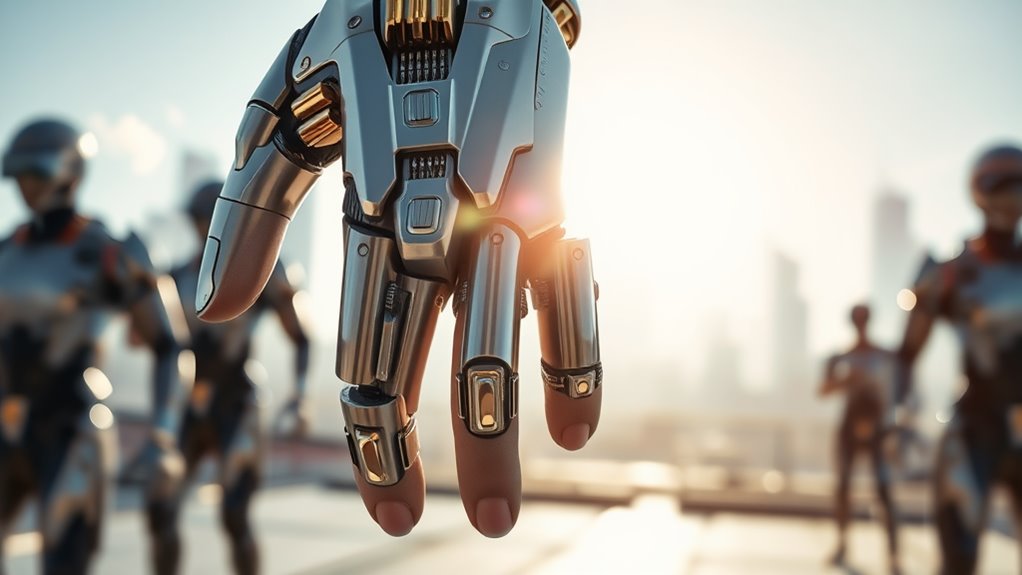
Human augmentation technology is changing how you view and improve your capabilities. With advancements in wearables, you can monitor your health and boost athletic performance. Exoskeletons and modern prosthetics improve mobility, helping you achieve greater independence. Cognitive enhancements like brain-computer interfaces improve focus and mental agility, whereas sensory upgrades heighten your perceptions. Nonetheless, these technologies likewise come with ethical questions about identity and access. As you explore these innovations, you'll discover how they're shaping not just individual lives but also societal norms and future possibilities. You won't want to miss what's next in this fascinating technological evolution.
Understanding Human Augmentation
Human augmentation refers to a broad range of technologies intended to improve human capabilities, whether physical, cognitive, or sensory. As you investigate this fascinating area, you'll discover how these advancements can expand your potential and empower your freedom. Envision boosting your memory, strength, or even sensory perception—these aren't just dreams anymore; they're becoming reality. Nonetheless, as you probe deeper into the domain of human augmentation, it's essential to contemplate the implications that come with these innovations.
Biological integration lies at the core of many augmentation technologies. This means merging technology with your biological systems, enhancing your abilities while maintaining your humanity. Although this can be incredibly liberating, it also raises questions about identity and what it means to be human. You may find yourself pondering: as you amplify your capabilities, do you risk losing fundamental aspects of yourself?
The social implications of human augmentation are equally significant. As these technologies become more accessible, they could redefine societal norms and expectations. You might be empowered by newfound abilities, but others may feel threatened or marginalized. This could potentially create a divide between those who can afford augmentation and those who cannot, leading to ethical dilemmas about equality and access.
Ultimately, as you navigate the universe of human augmentation, it's imperative to maintain a balance between embracing these technologies and safeguarding your individuality and freedom. The expedition ahead is as much about comprehending your rights as it is about boosting your capabilities.
Types of Human Augmentation
A wide array of human augmentation types exists, each intended to improve specific capabilities. Whether you want to raise your physical prowess or boost your sensory perception, there's likely a solution out there for you. One prominent category is genetic modifications. By altering your DNA, you can potentially improve traits like strength, endurance, or even cognitive abilities. Envision having the freedom to choose your genetic makeup to better suit your lifestyle and ambitions.
Another exciting type involves sensory improvements. This technology allows you to heighten your senses, giving you the ability to perceive the world in ways you never thought possible. You could sharpen your eyesight to see in the dark or amplify your hearing to detect sounds beyond the ordinary range. These upgrades could empower you to experience life more fully, connecting with your environment in a profound way.
With advancements in biotechnology and neuroscience, the possibilities seem endless. You could opt for implants that interface directly with your nervous system, granting you instantaneous access to information or even new skills. This is about reclaiming your agency and broadening the limits of what it means to be human.
As you explore these various types of human augmentation, consider how they align with your vision of freedom and self-improvement. By embracing these technologies, you're not just improving your abilities; you're redefining your potential. So, dare to envision a future where you can choose the enhancements that resonate with you.
Wearable Technology Innovations
Wearable technology innovations are revolutionizing the way you interact with the world and improve your daily life. With a range of wearable devices at your disposal, you can seamlessly integrate smart clothing and fitness trackers into your routine. These innovations utilize sensor technology and biometric sensors to provide real-time health monitoring, ensuring you stay informed about your well-being.
Imagine slipping on adaptive gear that not just fits your body perfectly but also tracks your performance analytics. Whether you're running, cycling, or simply going about your day, these devices gather data that helps you understand your body better. Plus, augmented reality features can improve your workouts, offering immersive experiences that keep you engaged and motivated.
Here's a quick look at some of the latest wearable technology innovations:
| Device Type | Key Features | Benefits |
|---|---|---|
| Smart Clothing | Embedded sensors, moisture-wicking | Improved comfort and data tracking |
| Fitness Trackers | Step counting, heart rate monitor | Real-time health insights |
| Augmented Reality Gear | Interactive overlays, navigation | Engaging workouts and activities |
| Biometric Sensors | Sleep tracking, activity monitoring | Enhanced health awareness |
| Adaptive Gear | Custom fit, responsive materials | Personalized performance |
With these advancements, you can take control of your health, improve your physical activities, and experience life in ways you never thought possible. Embrace the freedom that wearable technology offers and release your potential.
Enhancing Physical Abilities
As you explore the realm of enhancing physical abilities, you'll find exoskeletons revolutionizing mobility for those with physical limitations. Advances in prosthetics are not just about replacing limbs; they're transforming rehabilitation and improving quality of life. These technologies open up new possibilities, allowing you to regain strength and independence.
Exoskeletons for Mobility
Exoskeletons are transforming mobility for individuals with physical limitations, offering improved strength and endurance. These adaptive exoskeletons empower you to regain movement, improving your freedom in daily life. Whether you're using rehabilitation exoskeletons to recover from an injury or industrial exoskeletons to lift heavy loads safely, the benefits are clear.
However, there are exoskeleton challenges you should consider. The user experience can vary considerably based on design considerations, including comfort, fit, and weight. You'll want an exoskeleton that integrates seamlessly into your lifestyle, providing mobility assistance without hindrance. Safety is paramount, especially in military applications, where exoskeleton safety protocols must be strictly followed.
As you explore these technologies, keep in mind that not all exoskeletons are created equal. Some are customized for rehabilitation, whereas others improve industrial efficiency or military performance. It's crucial to choose the right one for your needs. With the right exoskeleton, you can rediscover your capabilities, pushing the boundaries of what you thought was possible. Embrace this innovative technology and reclaim your freedom of movement.
Prosthetics and Rehabilitation Advances
Advancements in prosthetics and rehabilitation are revolutionizing how individuals with limb loss or impairment improve their physical abilities. You're witnessing a remarkable transformation, where adaptive devices are designed not just for functionality but for enhancing your quality of life. These innovations are customized to meet your unique needs, allowing you to regain independence and engage in activities you love.
Rehabilitation robotics play a vital role in this process. They provide targeted therapy that adapts to your progress, helping you rebuild strength and coordination. Picture using robotic systems that guide your movements, making the rehabilitation process smoother and more effective. These technologies don't just push you through exercises; they empower you to push boundaries.
With every stride you take, these advanced prosthetics and rehabilitation aids remind you that limitations are merely challenges waiting to be conquered. You have the freedom to redefine your capabilities, and the latest technologies are here to support that mission. As you embrace these innovations, you're not just enhancing your physical abilities; you're reclaiming your life and all the possibilities it holds.
Cognitive Enhancement Techniques
When you think about boosting your mental capabilities, brain-computer interfaces and neurostimulation methods come to mind. These technologies can improve your focus, memory, and overall cognitive performance. Let's explore how they work and what they can do for you.
Brain-Computer Interfaces
Through the integration of brain-computer interfaces (BCIs), you're stepping into a world where cognitive improvement techniques can greatly boost your mental capabilities. These neural interfaces allow for direct communication between your brain and external devices, improving your ability to process information and interact with technology seamlessly. Envision being able to map your cognitive functions and optimize your thinking in real-time.
Here's how BCIs can transform your cognitive experience:
| Feature | Benefit |
|---|---|
| Neural Interface Design | Direct brain communication |
| Cognitive Mapping | Understand mental processes |
| Real-time Feedback | Immediate cognitive adjustment |
| Improved Memory | Enhance retention and recall |
As you explore BCIs, you'll gain the tools to access your full cognitive potential. Whether it's improving your focus, boosting your learning capabilities, or simply connecting with technology in a more intuitive way, the possibilities are endless. Embracing these advancements gives you the freedom to redefine your mental environment, pushing the boundaries of what you think is possible. Step into this new frontier and empower your mind like never before.
Neurostimulation Methods
Neurostimulation methods are revolutionizing cognitive improvement by directly influencing brain activity to improve mental performance. You might find yourself exploring techniques that improve your focus, memory, and creativity. Whether you're looking to excel in your career or simply enjoy a sharper mind, these advancements offer a tantalizing glimpse into the future of human potential.
Consider these formidable neurostimulation techniques:
- Transcranial Stimulation: This non-invasive method uses electrical currents to stimulate specific brain regions, boosting cognitive functions like attention and problem-solving.
- Invasive Implants: Although more radical, these devices can directly interface with the brain, offering unprecedented control over cognitive processes and even emotional regulation.
- Cognitive Behavioral Improvement: Techniques like deep brain stimulation can help improve mood and reduce anxiety, allowing you to break free from mental barriers.
Brain-Computer Interfaces Explained
Brain-computer interfaces (BCIs) bridge the gap between human cognition and technological advancement, allowing direct communication between the brain and external devices. Envision being able to control a computer, robotic arm, or even a wheelchair just by thinking about it. That's the potential BCIs offer, empowering you with newfound freedom and capabilities.
One exciting aspect of BCIs is neurofeedback training. This process enables you to train your brain to achieve specific mental states, enhancing focus, relaxation, or even creativity. By providing real-time feedback on your brain activity, neurofeedback helps you fine-tune your cognitive processes, leading to improved performance in various tasks. It's like having a personal coach for your mind, guiding you to reach your fullest potential.
Another fascinating application of BCIs is sensory substitution. This technology allows individuals to regain lost sensory functions by using alternative senses. For example, if you can't hear, a BCI might convert sound waves into visual signals, enabling you to "see" sound through your eyes. This innovative approach not just broadens your sensory experiences but additionally gives you the chance to interact with the world in new ways.
As you explore the domain of brain-computer interfaces, bear in mind that these technologies are not merely about enhancing abilities; they're about reclaiming your autonomy and broadening your horizons. The possibilities are limitless, inviting you to redefine what it means to be human in a world where technology works harmoniously with your mind.
Impacts on Healthcare
In recent years, the integration of human augmentation technologies like brain-computer interfaces is revolutionizing healthcare. You're witnessing a shift that empowers both patients and providers, leading to greater freedom in managing health outcomes. These innovations aren't just improving efficiency; they're improving the overall patient experience.
Consider the following impacts:
- Telemedicine advancements: Envision being able to consult with your doctor from the comfort of your home, using augmented reality to visualize your treatment options in real-time. You can access specialized care without geographical barriers, making healthcare more accessible than ever.
- Patient monitoring: With wearables and implantable devices, your health data can be tracked continuously. You can monitor crucial signs and receive alerts before issues escalate, giving you the ability to take control of your health proactively.
- Personalized treatment: Using AI and machine learning, healthcare providers can analyze your unique data to tailor treatments particularly for you. No more one-size-fits-all solutions; your health plan reflects your individual needs and lifestyle.
These advancements offer unprecedented autonomy in your healthcare path. By embracing human augmentation technologies, you're not just a passive recipient of medical care; you're an active participant in optimizing your well-being. The future is about utilizing technology to improve your freedom and choice in healthcare, and it's an exciting time to be alive.
Augmentation in Sports
As healthcare reaps the benefits of human augmentation technologies, the sports industry is similarly tapping into these advancements to improve athletic performance. You'll find that athletes today are using state-of-the-art tools aimed at improving their physical capabilities during prioritizing athlete safety. From wearable devices that track biometrics to advanced training equipment, performance enhancement is at the forefront of modern sports.
Imagine strapping on a smart device that monitors your heart rate and oxygen levels in real-time, providing instant feedback on your performance. This kind of technology not only helps you push your limits but also minimizes the risk of injuries. You can train harder and smarter, knowing that your body's data is being continuously analyzed, guiding you toward peak performance.
In addition, augmented reality is changing the way athletes train. By simulating game scenarios or adding virtual competitors, you're not just improving your skills but also gaining a competitive edge. This tech allows you to visualize plays, improve your strategic thinking, and finally perform better when it counts.
Moreover, innovations like exoskeletons and enhanced prosthetics enable athletes with disabilities to compete at levels once thought impossible. These advancements aren't just about winning; they're about redefining what's achievable in sports. With these technologies, you're empowered to break barriers, achieve greatness, and enjoy the freedom of pushing your physical limits safely and effectively.
Ethical Considerations
Maneuvering the territory of human augmentation technology in sports raises important ethical considerations that can't be overlooked. You're stepping into a domain where improvement isn't just about performance; it's about identity, social equity, and our collective values. Here are three key areas to ponder:
- Informed Consent: Are athletes fully aware of the psychological effects and risks associated with augmentation? Ensuring they understand the implications is essential.
- Equitable Access: Can all athletes access these technologies equally? If only a select few can afford improvements, it raises questions about fairness and societal implications.
- Cultural Perceptions: How does society view identity alteration through augmentation? Different cultures may embrace or reject these changes, influencing the ethics of enhancement.
As you consider these factors, think about the regulatory frameworks in place. Are they robust enough to safeguard athletes while promoting innovation? The balance between freedom and responsibility is delicate. Improvement ethics is not just about what you can do; it's about what you should do.
The potential for identity alteration leads to deeper questions about who we are as individuals and as a society. You can't ignore how these technologies might reshape cultural perceptions of success and achievement. As you navigate this exciting yet complex environment, keep in mind that the choices made today will echo through future generations, impacting how we define our humanity.
Future Trends in Augmentation
As you explore the future of human augmentation, you'll notice a significant shift toward improved cognitive capabilities and physical performance boosts. These advancements promise to redefine what it means to be human, pushing the boundaries of our mental and physical potential. It's exciting to think about how these technologies could transform everyday life and raise human experiences.
Enhanced Cognitive Capabilities
Improved cognitive capabilities are set to transform how we think, learn, and interact with technology. You'll experience a world where your mind operates at peak performance, releasing new potential in every aspect of your life. Envision being equipped with tools that improve your mental agility and creativity.
- Memory improvement lets you recall facts and experiences with ease, freeing you from cognitive load management.
- Decision-making tools empower you to make informed choices swiftly, optimizing your neural efficiency.
- Learning accelerators help you absorb information like never before, ensuring focus improvement and emotional regulation.
With attention modulation and creativity boosters, you'll navigate challenges with innovative problem-solving strategies. You won't just respond to the world around you; you'll shape it. As you utilize these enhanced cognitive capabilities, you'll discover a new sense of freedom in how you engage with information and technology. You'll no longer be bound by traditional limits, but instead, you'll thrive in a dynamic, constantly changing environment where your thoughts, ideas, and actions converge seamlessly. Embrace this revolution, and watch your cognitive horizons expand.
Physical Performance Boosts
Building on the improved cognitive capabilities that raise your mental performance, the future of human augmentation similarly promises remarkable boosts in physical performance. Envision utilizing advanced muscle stimulation technologies that improve your workouts, allowing you to push your limits during endurance training. With real-time performance tracking, you can monitor your progress and adapt your routines to maximize results.
Strength assessment tools will help you identify your weaknesses and tailor your training accordingly, ensuring you achieve ideal gains. As agility improvement becomes a focal point, you'll find innovative methods to improve your speed and responsiveness, whether in sports or daily activities.
Recovery techniques will likewise evolve, utilizing state-of-the-art therapies to speed up healing and reduce downtime, allowing you to get back to what you love faster. Embracing these advancements gives you the freedom to redefine your physical potential, revealing abilities you never thought possible.
As the domain of human augmentation expands, you'll find that your aspirations for a more capable, resilient body are within reach—empowering you to live life to the fullest. The future is yours to seize.
Real-World Applications
Human augmentation technology is transforming various sectors, bringing innovative solutions to everyday challenges. Envision a world where you can improve your capabilities without limitations. This technology isn't just theoretical; it's impacting real lives in tangible ways. Here are three key areas where you're likely to see these advancements:
- Healthcare: Wearable devices that monitor your health can now predict medical issues before they arise, greatly improving your quality of life.
- Education: Augmented reality tools are making learning more engaging, allowing you to explore complex subjects with interactive experiences.
- Military Uses: Advanced exoskeletons boost soldiers' physical abilities, helping them perform under extreme conditions.
While these applications have incredible potential, they likewise raise important social implications and privacy concerns. As you embrace these technologies, consider the economic impact they'll have on job markets and the regulatory challenges they pose. Will they create new opportunities or exacerbate existing disparities?
Moreover, cultural perceptions will play a significant role in how society accepts these advancements. Will you view augmentation as a means of empowerment or a threat to human identity?
Accessibility advancements are essential, ensuring that everyone can benefit from these innovations regardless of their circumstances. As you navigate this evolving environment, stay informed and engaged with the discussions surrounding these issues. The future is bright, but it requires your input to shape it responsibly.
The Human-AI Collaboration
As technology continues to advance, the collaboration between humans and artificial intelligence is becoming increasingly significant. You're not just working alongside AI; you're engaging in a dynamic, creative partnership that boosts your capabilities. This AI synergy transforms how you approach tasks, empowering you through collaborative intelligence.
Imagine having a virtual assistant that automates repetitive tasks, freeing you to focus on what truly matters. With task automation, your workflow optimization leads to increased productivity and a sense of accomplishment. Adaptive learning algorithms help tailor experiences to your preferences, ensuring that every interaction is intuitive and efficient.
Moreover, human-machine interaction is evolving. AI systems can now recognize emotions, allowing for more empathetic responses and decision support that aligns with your needs. This kind of emotion recognition offers deeper insights, improving both personal and professional relationships.
As you develop your skills, AI acts as a guide, providing real-time feedback and assistance, nurturing an environment where you can thrive. Whether you're brainstorming ideas or analyzing complex data, the partnership with AI raises your creative potential.
In this new era, you're not losing your autonomy; you're gaining a significant ally. Embracing this collaboration allows you to utilize technology for greater freedom and expression in your work and life. The future is bright, and with human-AI collaboration, you're equipped to navigate it with confidence and ease.
Frequently Asked Questions
What Are the Potential Risks of Human Augmentation Technologies?
When you think about risks tied to human augmentation technologies, it's hard not to reflect on the ethical implications. You might face health concerns that could arise from untested enhancements, as privacy issues could emerge as data about your body is collected and shared. Accessibility challenges might create a divide, leading to social inequality. Plus, the psychological effects of feeling pressured to augment could haunt you, stirring a desire for freedom in a swiftly changing world.
How Does Human Augmentation Impact Job Opportunities?
Human augmentation's impact on job opportunities is significant. You'll see skill improvement pushing employment evolution, as workers adapt to new technologies. Some jobs might disappear, but many others will emerge, demanding new skills. Embracing this change can lead to greater freedom in your career, allowing you to explore roles that weren't previously possible. By staying ahead of the curve, you'll position yourself to thrive in a swiftly changing job market.
Are There Age Restrictions for Using Augmentation Technology?
They say, "You're never too old to learn." In terms of age eligibility for using augmentation technology, guidelines can vary. Typically, many companies target youth participation, often requiring users to be at least 18. Nonetheless, some innovations might allow younger users with parental consent. It's vital to stay informed about regulations, as they can change and impact your access to these groundbreaking tools. Embrace the possibilities, regardless of age!
What Is the Cost of Implementing Human Augmentation Solutions?
When you're looking into the cost of implementing human augmentation solutions, consider both development costs and funding sources. Development costs can vary widely based on complexity and technology involved. You might find funding through grants, investors, or partnerships, which can help lighten the financial load. Keep in mind that investing in such technology often leads to greater freedom and improved capabilities, making it a worthwhile endeavor for many individuals and organizations.
How Do Cultural Attitudes Affect the Acceptance of Augmentation Technologies?
Cultural attitudes play a huge role in how you and others accept augmentation technologies. If you view enhancements positively, you're more likely to embrace them. Nevertheless, ethical considerations can create resistance, as fears about inequality or loss of humanity arise. Your cultural perceptions shape beliefs around these technologies, influencing how acceptable they seem. In the end, a society that values freedom and innovation will likely welcome augmentation more than one that prioritizes tradition and caution.
