
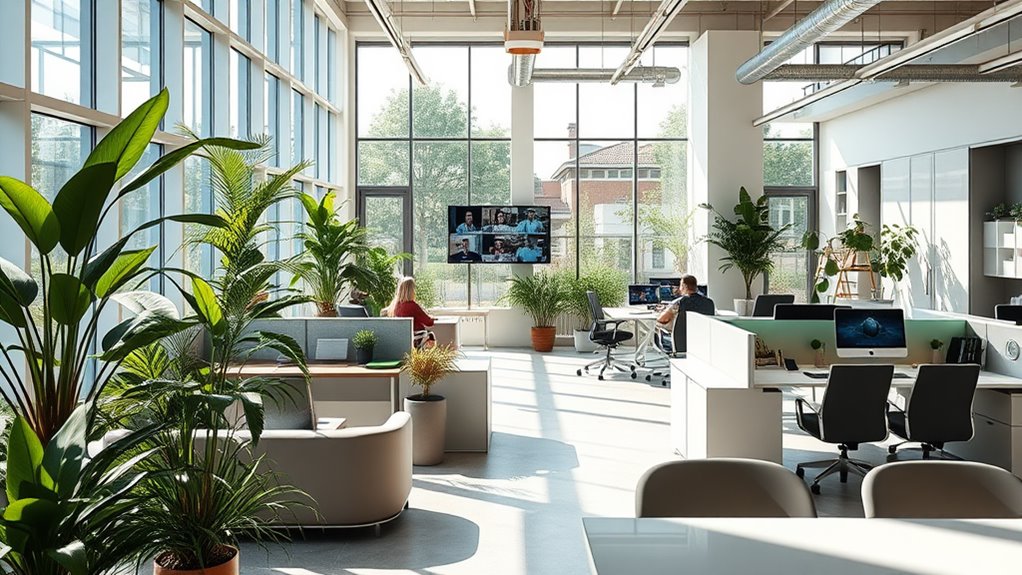
The future of office spaces in a post-pandemic world will center on hybrid work models that blend remote and in-office engagement. Flexibility in workspace design will be essential, allowing for diverse employee needs during promoting productivity. Improved health and safety measures, including advanced ventilation systems and contactless technologies, will guarantee a secure environment. Technology-driven solutions will facilitate seamless collaboration, as sustainable practices will reduce the environmental footprint. Ultimately, office spaces will evolve to prioritize employee well-being and engagement. For deeper insights into these emerging trends, consider exploring the various factors shaping tomorrow's work environments.
Shift to Hybrid Work Models
The shift to hybrid work models has fundamentally transformed the environment of office spaces, necessitating a reevaluation of traditional workplace dynamics. As organizations adopt remote work alongside in-office attendance, the need for robust communication strategies becomes paramount. Leaders must adapt their leadership styles to effectively manage teams that are not physically co-located, nurturing a culture that prioritizes both productivity and employee engagement.
Hybrid models introduce unique productivity challenges, as employees navigate the intricacies of work-life balance. Organizations must implement performance metrics that reflect the diverse working conditions of their teams to accurately assess contributions and outcomes. This adjustment is critical for maintaining motivation and ensuring that talent retention remains a priority in a competitive job market.
Moreover, the evolution of office culture in a hybrid environment hinges on the ability of teams to maintain strong dynamics in spite of physical separation. Regular check-ins, virtual team-building activities, and an emphasis on inclusive practices can greatly improve collaboration across remote and on-site employees. As a result, companies can cultivate an atmosphere where individuals feel valued, leading to improved employee satisfaction and loyalty.
Emphasis on Flexibility
As organizations adapt to hybrid work models, the emphasis on flexibility has emerged as a key element in redefining office spaces. The traditional, one-size-fits-all approach is giving way to a more nuanced comprehension of workspace adaptability, where environments are customized to meet the diverse needs of employees. This shift not only boosts productivity but also empowers employees, granting them greater autonomy over how and where they work.
Flexible office designs now prioritize multi-functional spaces that can easily be reconfigured to accommodate various tasks, whether collaborative meetings or focused individual work. The integration of technology plays an essential role in this transformation, allowing seamless changes between in-office and remote work. Companies are leveraging smart office solutions that facilitate real-time adjustments to workspace layouts, ensuring that employees can engage in their preferred working styles.
In addition, this adaptability promotes a culture of trust and responsibility, as employees feel valued and respected in their choices. When individuals have control over their work environments, they are more likely to contribute positively to the organization. Moreover, flexible office spaces are not just about physical layouts; they encompass policies that support diverse work arrangements and promote work-life balance.
Enhanced Health and Safety Measures
Prioritizing improved health and safety measures has become critical in the evolution of office spaces, particularly in the wake of the global pandemic. Organizations are now compelled to implement rigorous sanitization protocols and improve air quality to promote a safe working environment. This transformation involves the integration of advanced ventilation systems, guaranteeing that fresh air circulates effectively, thereby minimizing airborne pathogens.
To further promote health, many companies are adopting contactless solutions. These technologies streamline interactions, reducing touchpoints and the potential for virus transmission. In addition, space optimization plays a fundamental role in maintaining social distancing, allowing employees to work comfortably while adhering to safety guidelines.
Lighting adjustments are also being considered as part of the overall wellness strategy. Proper lighting not only improves productivity but can also influence mood and well-being, contributing to a healthier workplace. Moreover, the implementation of robust wellness programs encourages employees to prioritize their health, ultimately leading to increased job satisfaction and performance.
Occupancy tracking is another significant measure, enabling organizations to monitor and manage the number of individuals within the office at any given time. This proactive approach guarantees compliance with safety regulations and allows for timely adjustments to workplace arrangements.
Technology-Driven Workspaces
As organizations adapt to the evolving terrain of work, technology-driven workspaces are becoming crucial for enhancing productivity and collaboration. Smart office solutions, combined with advanced remote collaboration tools and health and safety technologies, are reshaping how employees interact with their environment and each other. This integration not merely improves operational efficiency but additionally prioritizes the well-being of the workforce.
Smart Office Solutions
The modern workplace is swiftly evolving, driven by the integration of smart office solutions that leverage technology to improve productivity and collaboration. These solutions empower organizations to create environments that prioritize employee well-being and operational efficiency. By implementing smart lighting systems, businesses can optimize energy usage as well as enhancing the comfort and focus of their teams. Adjustable lighting levels can be customized to natural light availability and individual preferences, ensuring that each employee operates in an environment conducive to peak performance.
Furthermore, maintaining high air quality is paramount for a thriving workspace. Smart sensors can monitor indoor air conditions, providing real-time data that enables prompt adjustments to ventilation and filtration systems. This proactive approach not just mitigates health risks but encourages a sense of control among employees, as they experience a noticeable improvement in their work environment.
Remote Collaboration Tools
Embracing remote collaboration tools has become imperative for organizations adapting to the demands of a hybrid work environment. As businesses increasingly adopt flexible work models, the need for effective communication and collaboration technologies has never been more apparent. These tools empower teams to maintain productivity and cohesion, regardless of physical location.
Central to successful remote collaboration are platforms that facilitate virtual team building. By utilizing video conferencing, instant messaging, and project management tools, organizations can promote a sense of belonging and engagement among team members. This is crucial in mitigating feelings of isolation that can arise in remote settings.
Moreover, grasping digital workspace etiquette is fundamental for maintaining professionalism in virtual interactions. Clear guidelines on communication frequency, responsiveness, and meeting protocols can greatly improve the collaborative experience. By establishing these norms, organizations can guarantee that all team members feel valued and included.
Health and Safety Tech
In the evolving terrain of hybrid work environments, health and safety technology has emerged as a critical component in guaranteeing employee well-being. Organizations are increasingly leveraging advanced solutions to strengthen health monitoring and infection control measures. Innovations such as thermal scanning and touchless technology minimize contact, thereby reducing potential transmission risks.
Air quality has taken center stage, with sophisticated ventilation systems and occupancy sensors working in tandem to maintain ideal conditions. These systems not only improve comfort but additionally contribute to healthier workspaces by guaranteeing adequate airflow and reducing airborne pathogens. Space optimization strategies further allow companies to maximize their physical environments during adherence to safety protocols.
Cleaning protocols have been transformed through automated systems that guarantee rigorous sanitation, complemented by wellness apps that empower employees to monitor their health status and report concerns easily. By integrating these technologies, organizations can provide a thorough framework for health and safety, cultivating an environment where employees feel secure and valued.
As we move forward, embracing these health and safety technologies will be paramount in shaping the future of office spaces, guaranteeing a resilient and productive workforce.
Collaborative Areas and Social Spaces
Amidst the evolving scenery of office environments, collaborative areas and social spaces have emerged as vital components in nurturing creativity and teamwork. As organizations pivot in the direction of hybrid work models, the design of these spaces must prioritize functionality and adaptability to meet the diverse needs of employees. Collaborative areas should be equipped with technology that facilitates seamless communication and project management, allowing teams to engage effectively, regardless of their physical location.
The integration of social spaces within the office environment plays a significant role in promoting a sense of community among employees. These areas, designed for informal interactions, serve as settings for team-building activities that can improve interpersonal relationships and strengthen team dynamics. For instance, well-planned lounges or recreational zones can encourage spontaneous creative brainstorming sessions, where ideas flow freely and innovation is sparked.
Furthermore, the strategic placement of collaborative spaces can influence workflow and productivity. Organizations should consider the balance between privacy and openness, ensuring that employees can choose environments conducive to their work styles. Providing diverse options—ranging from quiet zones for focused tasks to lively areas for group discussions—enables individuals to tailor their work experience.
Ultimately, the future of office spaces hinges on the thoughtful design of collaborative areas and social spaces. By prioritizing these elements, organizations can cultivate a culture that values collaboration, boosts employee engagement, and drives overall success in a post-pandemic environment.
Sustainable Design Practices
The evolution of office spaces must similarly consider the growing emphasis on sustainable design practices. Organizations are increasingly recognizing that integrating sustainable elements not just improves their corporate responsibility but additionally optimizes operational efficiency. By prioritizing green materials in construction and furnishing, businesses can considerably reduce their environmental footprint as they promote a healthier workplace.
Energy efficiency remains a cornerstone of sustainable design. Implementing advanced HVAC systems, LED lighting, and smart technology can lead to substantial savings in energy costs and a reduction in greenhouse gas emissions. Moreover, biophilic design principles, which emphasize the connection between nature and the built environment, encourage creativity and productivity among employees. Features such as natural light, indoor plants, and water elements can dramatically improve air quality, creating a more conducive working atmosphere.
Adaptive reuse of existing structures also plays a pivotal role in sustainable office development. Converting underutilized buildings into modern office spaces minimizes the need for new construction, conserving resources and reducing waste. Incorporating workplace gardens into these designs not only improves aesthetic appeal but additionally provides employees with a serene environment, promoting mental well-being.
Employee Well-Being Focus
Well-being has emerged as a crucial factor in shaping the future of office spaces, as organizations increasingly recognize the direct correlation between employee health and productivity. This paradigm shift necessitates a strategic focus on creating environments that not merely support physical health but additionally nurture mental wellness. As businesses navigate this new environment, the implementation of extensive mental health initiatives becomes paramount. These initiatives can include access to counseling services, stress management workshops, and the integration of wellness programs that promote a balanced work-life dynamic.
Furthermore, the design of office spaces must prioritize ergonomic furniture, which plays an essential role in enhancing employee comfort and reducing physical strain. By investing in adjustable desks, supportive chairs, and collaborative spaces that encourage movement, organizations can empower employees to take charge of their physical well-being. This proactive approach not only mitigates the risks associated with prolonged sedentary behavior but also cultivates an atmosphere of engagement and productivity.
Additionally, incorporating elements such as natural lighting, greenery, and quiet zones contributes to a holistic sense of well-being. These design considerations enable employees to reclaim control over their work environments, eventually leading to increased job satisfaction and performance.
Frequently Asked Questions
How Will Office Space Design Evolve With Changing Employee Preferences?
Office space design will evolve markedly to accommodate changing employee preferences, emphasizing collaborative environments that nurture teamwork. Incorporating wellness features will be vital, promoting mental and physical health within the workspace. Flexible layouts will allow organizations to adapt to varying work styles and team sizes, enhancing overall productivity. Moreover, technology integration will play a pivotal role in facilitating efficient communication and collaboration, ensuring that employees feel empowered and engaged in their work environment.
What Industries Will Benefit Most From New Office Space Trends?
Ironically, the industries that thrive on rigid structures may find themselves most invigorated by new office space trends. Sectors such as technology, finance, and creative services will benefit greatly from co-working spaces, flexible layouts, and hybrid models. These environments promote employee engagement through collaboration zones, wellness features, and technology integration, as sustainability initiatives resonate deeply with modern values. In the end, the drive for adaptability transforms traditional approaches into dynamic, thriving workplaces.
How Can Companies Measure the Success of Office Space Changes?
Companies can effectively measure the success of office space changes by utilizing employee satisfaction metrics and productivity assessment tools. By conducting regular surveys, organizations can gauge employee morale and engagement levels, as productivity assessment tools help quantify output and efficiency. Analyzing these data points allows companies to make informed adjustments, ensuring that the modified workspace aligns with their strategic objectives and improves overall operational effectiveness, in the end promoting a culture of continuous improvement and employee well-being.
Will Remote Work Remain Popular After the Pandemic?
The popularity of remote work is likely to persist, driven by the growing preference for hybrid work models. Employees increasingly value autonomy in choosing their work environments, aligning with the desire for flexibility and work-life balance. Organizations that embrace this trend can improve employee satisfaction and productivity, nurturing a culture that prioritizes personal choice. In the end, the success of remote work will depend on companies' ability to adapt to these evolving expectations.
What Role Will Government Regulations Play in Office Space Design?
Ironically, as we seek control over our environments, government regulations increasingly dictate office space design. Zoning laws will determine the permissible locations for businesses, whereas stringent health guidelines will shape layouts to prioritize employee safety. Building codes will enforce structural integrity and accessibility, ensuring compliance with modern standards. In addition, sustainable practices will be mandated, aiming for eco-friendly designs that reflect societal values. Eventually, these regulations will guide a more effective and responsible workspace evolution.
