
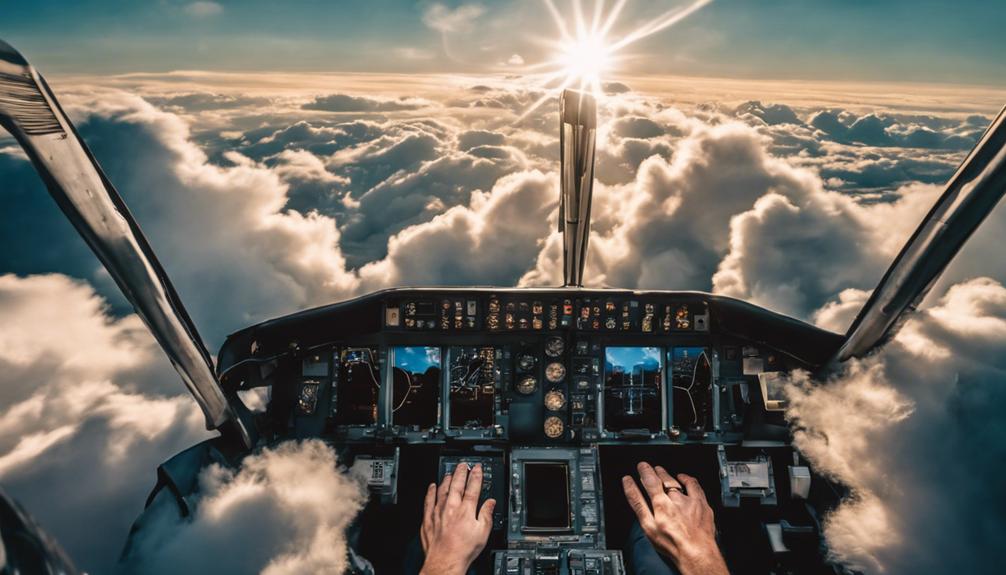
Top pilots, known for their exceptional safety records and ability to perform under intense pressure, possess a unique set of leadership skills. They excel at risk management, staying focused under pressure, and building trust with their crew. Effective communication, swift decision-making, and crisis management are also essential skills they've mastered. By studying their strategies, leaders in any field can improve their performance. As they navigate the skies, they're constantly adapting and making informed decisions. Explore the cockpit and discover the secrets behind their success – and uncover the essential lessons that can propel you to new heights.
Risk Management in the Skies
Frequently, top pilots credit their ability to manage risk as the key to their exceptional safety records. These skilled aviators have honed their skills to navigate complex situations, often in high-pressure environments. Effective risk management is vital in the cockpit, where split-second decisions can mean the difference between life and death.
Top pilots understand that risk is inherent in flying, but they don't let fear dictate their actions. Instead, they methodically assess potential hazards, identify vulnerabilities, and develop contingency plans. By anticipating and mitigating risks, they create a safe and controlled environment for passengers and crew.
One critical aspect of risk management is situational awareness. Top pilots maintain a constant flow of information, monitoring weather patterns, air traffic control updates, and aircraft performance. This awareness enables them to adjust their strategy in real-time, adapting to changing circumstances and minimizing potential threats.
In addition to technical proficiency, top pilots possess exceptional decision-making skills. They can prioritize tasks, weigh risks and benefits, and make swift, informed decisions. This combination of technical expertise and sound judgment allows them to navigate even the most challenging situations with confidence and precision. As leaders, they inspire trust and confidence in their teams, fostering a culture of safety and accountability. Moreover, top pilots continuously seek to expand their knowledge and skills, always staying updated on industry advancements and best practices. By incorporating innovative strategies and technologies into their workflows, they create a visionary toolkit for industry leaders, ensuring that their teams remain adaptable and resilient in the face of changing conditions. This proactive approach not only enhances operational efficiency but also sets a standard for excellence within the aviation community.
Staying Focused Under Pressure
When faced with high-pressure situations, top pilots rely on their ability to maintain focus, prioritizing tasks and filtering out distractions to guarantee safe and successful flight operations. They've honed this skill through extensive training, allowing them to remain calm and composed under intense pressure. By maintaining a laser-like focus, pilots can quickly identify and address potential threats, ensuring the safety of everyone on board.
To achieve this level of focus, pilots employ various techniques. They prioritize tasks, breaking down complex procedures into manageable chunks, and delegate tasks to their crew members. This enables them to maintain a clear mental picture of the situation, making swift and informed decisions when seconds count. Additionally, they've developed the ability to filter out distractions, ignoring non-essential information and minimizing mental clutter.
Top pilots also understand the importance of situational awareness, constantly monitoring their surroundings and adapting to changing circumstances. This heightened sense of awareness enables them to anticipate potential risks and take proactive measures to mitigate them. By staying focused and alert, pilots can respond effectively to emergencies, ensuring the safe and successful execution of their mission. By adopting these strategies, leaders can develop the mental discipline and clarity required to thrive under pressure, making informed decisions that drive success.
Building Trust in the Cockpit
Top pilots foster a culture of trust in the cockpit by establishing open communication channels, encouraging active participation, and promoting a shared sense of responsibility among crew members. This trust is the foundation upon which successful flights are built. When crew members trust each other, they're more likely to speak up, share concerns, and collaborate to overcome challenges. In the high-stakes environment of commercial aviation, trust is literally a matter of life and death.
To build trust, pilots lead by example, demonstrating transparency, accountability, and a willingness to listen. They create a safe space for crew members to express concerns or admit mistakes without fear of retribution. By doing so, they encourage a growth mindset, where mistakes are seen as opportunities for growth and improvement. This, in turn, fosters a culture of continuous learning and improvement.
Trust also enables pilots to delegate effectively, empowering crew members to take ownership of their tasks and make decisions with confidence. When crew members feel trusted and valued, they're more likely to go above and beyond, ensuring that every flight is a success. By prioritizing trust-building, top pilots create a cohesive, high-performing team that's better equipped to handle the complexities of modern aviation.
Communication Strategies for Success
By fostering a culture of trust, pilots can focus on refining their communication strategies, which are critical to conveying complex information quickly and accurately in the high-pressure cockpit environment. Effective communication is key to guaranteeing the safety of everyone on board, and it requires a deep understanding of the nuances of language and the subtleties of human interaction.
Top pilots recognize that clear communication is not just about conveying information, but also about establishing a sense of clarity and confidence among the crew. They use simple, concise language to avoid ambiguity and make certain that everyone is on the same page. They also make liberal use of standardized communication protocols, such as the 'read back' procedure, to make certain that critical information is received and understood correctly.
Moreover, pilots understand the importance of active listening, maintaining eye contact, and using non-verbal cues to reinforce their message. They are also adept at adapting their communication style to suit different personalities and situations, whether it's communicating with air traffic control or negotiating with their crew. By mastering these communication strategies, pilots can minimize misunderstandings, reduce errors, and create a safer, more efficient cockpit environment.
Decision-Making at 30,000 Feet
When crisis strikes at 30,000 feet, pilots don't have the luxury of hesitation. They must make swift, informed decisions to guarantee the safety of everyone on board. In these high-pressure situations, effective decision-making is a matter of life and death.
Crisis in the Air
In the blink of an eye, a minor issue can escalate into a full-blown emergency at 30,000 feet, forcing pilots to make swift, lifesaving decisions. When crisis strikes, pilots must draw upon their training, experience, and instincts to respond quickly and effectively. This high-pressure environment demands exceptional decision-making skills, as the consequences of error can be catastrophic.
| Crisis Scenario | Pilot's Response |
|---|---|
| Engine failure | Declare emergency, initiate emergency procedures |
| Severe turbulence | Adjust altitude, reroute if necessary |
| Medical emergency | Divert to nearest airport, provide first aid |
| System malfunction | Isolate faulty system, reroute functions |
In the face of crisis, pilots must remain calm, focused, and adaptable. By prioritizing safety, maintaining situational awareness, and communicating effectively, they can mitigate the risks and guarantee a successful outcome. By studying the decision-making processes of pilots in crisis situations, leaders can develop valuable insights into effective crisis management.
Swift Action Required
At 30,000 feet, pilots have mere seconds to decide, and their swift action can mean the difference between life and death. When crisis strikes, every moment counts, and hesitation can be catastrophic. Top pilots have honed their decision-making skills to respond swiftly and effectively in the face of emergency. They don't have the luxury of deliberation or debate; they must act decisively and with confidence.
In the cockpit, pilots rely on their training, experience, and instincts to make split-second decisions. They've developed a keen sense of situational awareness, constantly scanning their environment for potential threats and opportunities. This heightened awareness enables them to respond rapidly to changing circumstances, making swift and effective decisions that safeguard the safety of their passengers and crew.
Effective leaders can learn from these pilots' ability to make swift, decisive decisions under pressure. By cultivating a similar sense of situational awareness and trusting their instincts, leaders can develop the confidence to make timely, informed decisions that drive results. In today's fast-paced business environment, the ability to respond swiftly and decisively is a critical leadership skill – one that can mean the difference between success and failure.
Leading by Example in Turbulent Times
When turbulence hits, top pilots lead by example, demonstrating unwavering composure under pressure. They set a clear course, making decisive adjustments to steer their team through the storm. By staying calm, setting the right course, and leading by personal example, they inspire confidence and trust in their crew, ensuring a safe and successful flight.
Stay Calm Under Pressure
Top pilots understand that staying calm under pressure is essential, as their composure sets the tone for the entire crew's response to emergency situations. When the stakes are high, a calm and collected leader helps to reduce panic and anxiety among the team. This, in turn, enables them to think more clearly and make better decisions. By remaining calm, pilots can assess the situation more accurately, prioritize tasks, and execute the necessary actions to resolve the crisis. This composure also helps to build trust among the crew, as they feel more confident in their leader's ability to handle the situation. Additionally, staying calm under pressure allows pilots to maintain a clear head, think strategically, and make swift decisions that can mean the difference between life and death. By mastering this critical skill, leaders can inspire confidence, build trust, and ultimately, achieve better outcomes in high-pressure situations.
Set the Right Course
By establishing a clear direction and leading by example, pilots demonstrate their ability to navigate the aircraft through turbulent skies, providing a sense of stability and reassurance to their crew. In turbulent times, a clear course is essential to avoid chaos and confusion. Pilots set the right course by communicating effectively, making decisive decisions, and prioritizing tasks. They focus on the big picture, anticipating potential obstacles, and adapting to changing circumstances. This leadership approach instills confidence in the crew, ensuring they work together seamlessly to overcome challenges.
In business, leaders can apply similar principles to navigate their organizations through turbulent times. By setting a clear direction, leaders provide a sense of purpose and direction, enabling their teams to work towards a common goal. By leading by example, they demonstrate their commitment to the vision, inspiring their teams to follow suit. When leaders set the right course, they empower their teams to make informed decisions, prioritize tasks effectively, and adapt to changing circumstances. As a result, the organization becomes more resilient, agile, and better equipped to overcome obstacles.
Lead by Personal Example
In the cockpit, pilots lead by personal example, demonstrating their unwavering commitment to safety and precision in the face of turbulence. They understand that their actions set the tone for the entire crew, and their behavior is scrutinized by every team member. By leading by example, pilots show their team that they're committed to excellence, even in the most challenging situations.
Here's what it looks like in action:
- Clear communication: Pilots clearly articulate their intentions, ensuring everyone's on the same page.
- Calculated risk-taking: They take informed risks, weighing the pros and cons before making a move.
- Adaptability: Pilots adjust their strategy as needed, staying flexible in the face of changing circumstances.
- Accountability: They own up to their mistakes, taking responsibility for their actions.
- Resilience: Pilots remain calm under pressure, inspiring their team to do the same.
Crisis Management From the Cockpit
When unexpected turbulence hits, pilots rely on their rigorous training and experience to stay focused and make swift decisions, a valuable lesson for leaders facing crises in their own organizations. In the cockpit, every second counts, and pilots must prioritize tasks, manage their workload, and communicate effectively to guarantee a safe outcome. These skills are equally essential for leaders handling crises, where clear thinking, swift decision-making, and effective communication are vital.
| Crisis Phase | Pilot's Response | Leadership Lesson |
|---|---|---|
| Initial Response | Assess situation, prioritize tasks | Stay calm, focus on key issues |
| Information Gathering | Collect data, analyze situation | Gather facts, avoid assumptions |
| Decision-Making | Weigh options, choose course of action | Consider alternatives, make informed decisions |
| Communication | Inform crew, passengers of situation | Transparency, honesty with stakeholders |
| Review and Adapt | Analyze response, improve process | Review crisis response, implement changes |
Frequently Asked Questions
How Do Pilots Handle Conflicting Priorities in Emergency Situations?
"A million things are going wrong at once, and pilots must prioritize like their lives depend on it – because they do. In emergency situations, pilots handle conflicting priorities by relying on rigorous training and a clear decision-making framework. They rapidly assess the situation, identify the most critical tasks, and execute them with precision. By staying focused and calm under pressure, pilots can avert disaster and emerge victorious, even when the stakes are sky-high."
Can Pilots Ever Fully Prepare for Unexpected Events?
Pilots can't fully prepare for the unexpected, but they can develop a mindset that enables them to adapt quickly. They prioritize flexibility and situational awareness, staying vigilant for signs of trouble. By fostering a culture of continuous learning, they refine their skills and instincts, increasing their ability to respond effectively in unanticipated situations. This proactive approach helps them stay one step ahead of the unexpected, even when the unforeseen occurs.
What Role Does Emotional Intelligence Play in Pilot Decision-Making?
Can anyone truly make rational decisions when their heart is racing and adrenaline is pumping? Emotional intelligence plays a vital role in pilot decision-making, as it enables them to recognize and manage their emotions, even in high-pressure situations. By being self-aware, pilots can separate emotions from logic, making more informed decisions that don't let fear or panic take the wheel. This emotional intelligence helps pilots stay focused and in control, even when the stakes are high.
How Do Pilots Maintain Situational Awareness in Low-Visibility Conditions?
Pilots maintain situational awareness in low-visibility conditions by relying on a combination of technical skills and mental preparation. They continually update their mental maps, using instruments and navigation aids to stay on course. They also prioritize tasks, focusing on the most critical information to stay ahead of the aircraft. By trusting their training and staying vigilant, pilots can navigate even the most challenging conditions with confidence.
Are There Specific Leadership Styles More Effective in Aviation?
Decisive directors dominate dynamic aviation teams. Effective leadership styles in aviation prioritize clear communication, swift decision-making, and situational awareness. Autocratic leaders thrive in high-stress environments, while democratic leaders foster collaboration and adaptability. Transformational leaders, meanwhile, inspire innovation and growth. Ultimately, a flexible, adaptive approach to leadership guarantees safe, successful flights. By embracing a dynamic style, aviation leaders can navigate turbulent skies with confidence.
