
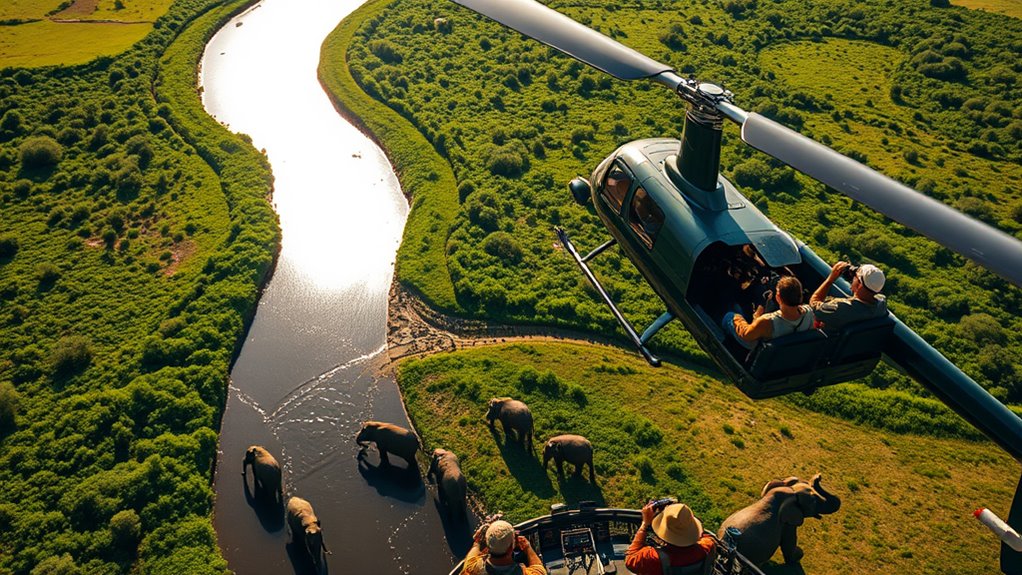
Aviation plays a crucial role in preserving endangered wildlife by enabling efficient data collection and management. Aerial surveys allow conservationists to monitor wildlife populations and critical habitats with minimal disturbance. Furthermore, aviation facilitates the rapid relocation of species threatened by habitat loss or disasters, thereby enhancing ecosystem resilience. Drones improve surveillance efforts against poaching as they offer real-time insights into animal behavior and migration patterns. As technological advancements continue, the impact of aviation on wildlife conservation will evolve further. To uncover the potential challenges and future innovations in this field, further exploration is fundamental.
Historical Overview of Aviation in Conservation
The advent of aviation in the early 20th century transformed conservation efforts, enabling researchers and wildlife managers to survey vast and inaccessible areas with unprecedented efficiency. Early aviation milestones, such as the introduction of lightweight aircraft and advances in aerial photography, laid the groundwork for integrating flight into ecological studies. By the 1930s, pioneers like the U.S. Forest Service began utilizing aircraft to monitor forest health and wildlife populations, marking a significant progression in conservation methodologies.
The mid-20th century witnessed a burgeoning of conservation partnerships between governmental bodies and private organizations, leveraging aviation's capabilities to improve ecological research and habitat management. Collaborations between scientists and aviators grew, as aerial surveys became instrumental in establishing wildlife reserves and evaluating the impacts of human activities on ecosystems. These partnerships facilitated a more holistic approach to conservation, allowing for the collection of data that was previously unattainable.
Furthermore, the development of aerial surveillance technologies, such as infrared imaging and real-time data transmission, transformed wildlife management strategies. Conservationists could track animal movements and habitat changes with precision, leading to more informed decision-making. As a result, aerial methodologies became integral to combating poaching, monitoring endangered species, and managing protected areas.
Aerial Surveys and Wildlife Monitoring
Aerial surveys have emerged as a crucial tool in wildlife monitoring, providing researchers and conservationists with the ability to gather data over extensive and often difficult-to-reach habitats. Utilizing advanced aerial photography techniques, these surveys enable the systematic collection of visual data that greatly improves wildlife tracking efforts. By employing high-resolution cameras mounted on aircraft or unmanned aerial vehicles (UAVs), researchers can capture detailed images of animal populations and their habitats.
The integration of aerial surveys into wildlife monitoring programs offers several advantages. To begin with, it allows for the assessment of large areas in a fraction of the time required for ground-based surveys, thereby increasing efficiency. Additionally, aerial surveys minimize human disturbance to wildlife, enabling more accurate observations of behavior and population dynamics. In addition, the ability to cover diverse terrains—ranging from dense forests to remote wetlands—ensures thorough data collection that informs conservation strategies.
Moreover, aerial surveys facilitate the identification of critical habitats, migration patterns, and potential threats to species, such as habitat loss or poaching. The data obtained can be analyzed using Geographic Information Systems (GIS) to produce spatial models that guide conservation decision-making. By tapping into the capabilities of aerial photography, conservationists can thereby obtain a holistic view of ecosystems, improving their ability to protect endangered species effectively. Ultimately, aerial surveys represent a pivotal advancement in wildlife monitoring, greatly contributing to informed and strategic conservation efforts.
Airlifting Endangered Species
Airlifting endangered species has become a crucial component of wildlife conservation efforts, ensuring the safe transport of vulnerable animals to secure locations. Emergency relocation efforts are often necessary to protect species from immediate threats, whereas aviation plays an essential role in facilitating habitat restoration support. By leveraging aerial capabilities, conservationists can improve the survival prospects of at-risk wildlife populations.
Transporting Species Safely
Transporting endangered species safely is a critical component of wildlife conservation efforts, with numerous successful airlifts demonstrating its effectiveness. This method is crucial in facilitating wildlife translocation and enhancing species rehabilitation, guaranteeing that at-risk populations are relocated to more suitable habitats without undue stress or harm.
The following key considerations greatly contribute to the success of airlifting endangered species:
- Optimal Conditions: Confirming that aircraft environments are customized for the specific needs of the species being transported, including temperature control and appropriate containment, minimizes stress during transit.
- Expert Handling: Utilizing trained wildlife professionals during the airlift process is fundamental. Their expertise in animal behavior and veterinary care guarantees that each species is treated with the utmost respect and care throughout the voyage.
- Post-Transport Monitoring: Implementing a rigorous monitoring regime after the airlift promotes long-term success in species rehabilitation. This includes tracking health, behavior, and adaptation to the new environment, allowing for timely interventions if necessary.
Through careful planning and execution, airlifting endangered species assists in their immediate transport while playing a crucial role in broader conservation strategies.
Emergency Relocation Efforts
Emergency relocation efforts for endangered species are often vital in mitigating the impacts of natural disasters, habitat destruction, or human encroachment. These urgent interventions frequently rely on aviation to transport vulnerable species to safer environments, thereby facilitating their survival and reducing the risk of extinction.
The implementation of airlifting strategies not only improves the immediate response capabilities but additionally supports the establishment of wildlife corridors, which are fundamental for long-term species recovery. These corridors enable relocated populations to thrive by connecting fragmented habitats, allowing for genetic diversity and behavioral adaptation.
Conservation partnerships play a pivotal role in these efforts, as collaboration among governmental agencies, non-profit organizations, and local communities promotes a thorough approach to wildlife management. Such partnerships often provide the necessary resources, expertise, and logistical support vital for successful airlifting operations.
Ultimately, the integration of aviation in emergency relocation efforts indicates a proactive stance in wildlife conservation, underscoring the importance of adaptive strategies to counteract the pervasive threats faced by endangered species today. Through strategic planning and collaboration, the aviation sector can greatly contribute to the preservation of our planet's most vulnerable inhabitants.
Habitat Restoration Support
The successful relocation of endangered species both addresses immediate survival needs and plays a significant role in habitat restoration efforts. Airlifting these species through aviation not merely improves their chances of survival but additionally contributes to the revitalization of ecosystems that have suffered degradation. This multifaceted approach necessitates robust conservation partnerships that leverage the strengths of various stakeholders, including governmental agencies, non-governmental organizations, and local communities.
The primary objectives of utilizing aviation for habitat restoration support include:
- Targeted Relocation: Ensuring that endangered species are moved to areas where they can thrive, thereby re-establishing populations in their historical ranges and promoting genetic diversity.
- Ecosystem Recovery: Facilitating the reintroduction of species that play critical roles in their ecosystems, which can lead to improved resilience and overall biodiversity.
- Monitoring and Assessment: Utilizing aerial surveillance to track the health of relocated populations and their habitats, enabling adaptive management strategies that improve long-term conservation outcomes.
Tracking Animal Migration Patterns
Advancements in satellite technology have transformed the way researchers track animal migration patterns, providing real-time data that improves our grasp of wildlife behavior. These innovations have refined data collection methods, allowing for more accurate and thorough analyses of migratory routes. By utilizing aviation resources, scientists can monitor these patterns effectively, contributing to conservation efforts and habitat preservation.
Satellite Technology Advancements
Recent innovations in satellite technology have transformed the way researchers track animal migration patterns, providing unprecedented insights into wildlife behavior and ecology. By utilizing advanced satellite imagery and real-time tracking capabilities, scientists can now monitor species with a level of detail and immediacy that was previously unattainable. This technological evolution is vital for conservation efforts, as it enables a deeper comprehension of migratory routes, habitat use, and the impacts of environmental changes.
The advantages of these advancements include:
- Enhanced Data Accuracy: Utilizing high-resolution satellite imagery allows researchers to gather precise information on animal locations and movements, leading to more reliable data analysis.
- Increased Coverage: Satellite systems can cover vast geographical areas, enabling the tracking of species in remote regions where traditional methods would be impractical.
- Timely Decision-Making: Real-time tracking provides immediate feedback on animal movements, facilitating prompt responses to emerging threats such as habitat destruction or poaching.
Data Collection Methods
Innovative satellite technology has set the stage for a range of data collection methods that improve the tracking of animal migration patterns. These methods not only improve data accuracy but also facilitate long-term studies that are vital for comprehending climate impact on various species. By employing species-specific methods, researchers can gather nuanced data that informs conservation strategies.
| Method | Impact |
|---|---|
| Satellite Tracking | Provides real-time migration data |
| GPS Collars | Increases individual tracking accuracy |
| Aerial Surveys | Offers broad population assessments |
| Camera Traps | Captures behavioral insights |
| Community Reporting | Engages local involvement |
Ethical considerations must guide these technological advancements to guarantee minimal disruption to wildlife. Funding sources are essential for sustaining these initiatives, often requiring collaborative efforts among researchers, regulatory frameworks, and community stakeholders. By promoting community involvement, conservationists can improve data collection while encouraging awareness and stewardship. In the end, the integration of diverse data collection methods paves the way for more effective wildlife preservation strategies in an ever-changing environment.
Using Drones for Conservation Efforts
Drones have emerged as transformative tools in wildlife conservation, enabling researchers and conservationists to monitor and protect endangered species with unprecedented efficiency. The integration of drone technology into conservation applications facilitates a range of innovative strategies for wildlife tracking and habitat management, ultimately improving the effectiveness of conservation efforts.
The following are key applications of conservation drones in the field:
- Aerial Photography and Wildlife Surveys: Drones equipped with high-resolution cameras can capture detailed images of wildlife populations, allowing for thorough wildlife surveys that were previously difficult or dangerous to conduct. This technology enables the assessment of animal behavior and population dynamics from a safe distance.
- Habitat Mapping and Remote Sensing: Conservation drones can create intricate maps of habitats, utilizing remote sensing data to identify critical areas for species conservation. This information is invaluable for habitat restoration efforts, ensuring that resources are allocated effectively.
- Anti-Poaching Measures: Drones play a pivotal role in anti-poaching operations by providing real-time surveillance of protected areas. Their ability to cover vast terrains quickly allows for immediate response to poaching threats, greatly improving the protection of endangered species.
The data analysis derived from drone-collected imagery and sensor data contributes to informed decision-making, promoting a more strategic approach to wildlife conservation. By leveraging these technological advancements, conservationists can improve their efforts to safeguard endangered species and their habitats, ensuring a sustainable future for biodiversity.
Emergency Response and Wildlife Rescue
The urgency of wildlife rescue operations often hinges on timely and effective emergency response strategies, particularly during natural disasters or environmental crises. Aviation plays a vital role in facilitating these operations, enabling swift access to remote areas that may be inaccessible by ground transport. The use of helicopters and fixed-wing aircraft allows teams to quickly assess damage, transport personnel, and deliver important supplies for wildlife rehabilitation.
Aerial firefighting is one of the most important applications of aviation in wildlife rescue, especially in regions prone to wildfires. Aircraft equipped with water and fire retardant can combat raging fires, thereby protecting habitats and the species that inhabit them. By mitigating the spread of flames, these aerial units not just safeguard ecosystems but likewise provide critical time for wildlife to escape to safer areas.
Alongside immediate firefighting efforts, aviation supports the rehabilitation of affected wildlife. After a crisis, dedicated teams utilize aircraft to transport injured animals to rehabilitation centers, ensuring they receive prompt medical attention. This rapid response can greatly increase survival rates among displaced or harmed wildlife.
Moreover, aircraft can facilitate the monitoring of ecological recovery in the aftermath of disasters. By employing aerial surveys, conservationists gather vital data to evaluate the effectiveness of rehabilitation efforts and to devise strategies for long-term recovery.
Collaborations Between Aviators and Conservationists
Cultivating partnerships between aviators and conservationists greatly boosts wildlife protection efforts. These collaborations utilize the unique capabilities of aviation to improve conservation strategies, facilitating critical initiatives that would be impossible without aerial support. Aviation partnerships are pivotal for advancing the objectives of wildlife preservation, particularly in remote and inaccessible areas.
There are several ways in which these collaborations manifest:
- Resource Allocation: Aviation partnerships can greatly improve conservation funding by enabling access to a broader range of financial resources. By aligning the interests of private aviation companies with conservation goals, funding opportunities are expanded, allowing for the implementation of more thorough conservation projects.
- Data Collection and Monitoring: Through aerial surveys and tracking, aviators provide invaluable data that informs conservation strategies. These aerial capabilities enable conservationists to monitor wildlife populations, assess habitat conditions, and identify threats with unprecedented accuracy, finally leading to more effective interventions.
- Rapid Response Capabilities: In emergency situations, such as poaching incidents or natural disasters, the agility of aviation can be utilized to facilitate swift conservation actions. This rapid response not only mitigates immediate threats but contributes to long-term conservation planning by providing insights into the dynamics of wildlife populations under stress.
Education and Awareness Through Aviation
Aviation serves as a potent tool for education and awareness in wildlife conservation. Flight tours provide immersive experiences that educate participants about ecosystems and endangered species, nurturing a deeper appreciation for nature. Furthermore, aerial wildlife monitoring programs improve data collection efforts, allowing for informed conservation strategies and increased public engagement.
Flight Tours for Education
Providing immersive flight tours serves as a potent tool for education and awareness, allowing participants to witness wildlife in their natural habitats from a unique vantage point. These flight experiences not only improve appreciation for nature but also promote a deeper comprehension of the ecological challenges faced by endangered species. By engaging in such programs, individuals can observe wildlife interactions that are often hidden from ground-level perspectives.
The significance of flight tours can be summarized in three key aspects:
- Improved Learning: Participants absorb knowledge about ecosystems, behaviors, and the threats to wildlife, thereby cultivating a well-informed perspective on conservation efforts.
- Community Engagement: Flight tours often involve local experts who share their insights, encouraging a sense of community and collaboration among conservationists and the public.
- Inspiration for Action: Experiencing the beauty and fragility of wildlife from above can galvanize individuals to support conservation initiatives, whether through advocacy, donations, or participation in local environmental programs.
Aerial Wildlife Monitoring Programs
Building on the educational benefits of flight tours, aerial wildlife monitoring programs play an essential role in conservation efforts by utilizing aircraft to gather data on animal populations and their habitats. These programs employ advanced conservation technology, including aerial photography and aerial telemetry, to facilitate wildlife tracking and improve species identification. By employing high-resolution imaging, researchers can conduct extensive ecological assessments that inform habitat mapping and reveal vital insights into animal behavior and flight patterns.
Through these initiatives, conservation funding can be strategically allocated to areas of greatest need, ensuring that resources are effectively utilized for the protection of endangered species. Aerial monitoring not only provides real-time data but also encourages collaboration among scientists, conservationists, and policymakers, creating a unified approach to wildlife preservation.
Moreover, the integration of drone technology into these programs has transformed data collection, allowing for precise monitoring of remote and inaccessible areas. This technological innovation improves the efficacy of wildlife conservation strategies and serves to educate the public about the intricacies of ecosystems. In the end, aerial wildlife monitoring programs exemplify the synergy between aviation and ecological stewardship, advancing our knowledge of wildlife dynamics and promoting long-term conservation goals.
Challenges and Limitations of Aviation in Conservation
Even though aviation has the potential to greatly enhance wildlife conservation efforts, it furthermore faces numerous challenges and limitations that can hinder its effectiveness. These impediments often arise from a confluence of regulatory hurdles, funding constraints, and technological limitations, which can complicate the implementation of aerial conservation initiatives.
- Regulatory Hurdles: The aviation industry is heavily regulated, and these frameworks can delay or prevent the deployment of aircraft for conservation purposes. Complicated compliance procedures may stifle innovative approaches to wildlife monitoring and protection.
- Environmental Impact: While aviation can facilitate conservation, it may likewise contribute to environmental degradation. The carbon footprint of flights and potential disturbances to sensitive ecosystems are significant concerns that need to be addressed.
- Safety Concerns and Logistical Challenges: Ensuring the safety of personnel and wildlife during operations is paramount. Logistical challenges such as maintaining aircraft, maneuvering remote areas, and accommodating species-specific needs further complicate conservation efforts.
Public perception also plays a pivotal role in the success of aviation in conservation. Communities may harbor skepticism regarding the effectiveness of aerial interventions, potentially leading to resistance against initiatives. In the end, addressing these challenges is vital for maximizing the potential of aviation in wildlife conservation, necessitating collaboration among stakeholders to develop sustainable and effective strategies.
Future Innovations in Wildlife Aviation
Emerging technologies are poised to transform the role of aviation in wildlife conservation, offering innovative solutions to longstanding challenges. Sustainable aviation practices, including the development of eco-friendly aircraft, are set to improve the efficiency of wildlife protection efforts. These advancements not only reduce the carbon footprint associated with traditional aircraft but also promote a harmonious relationship between conservation activities and environmental stewardship.
Aerial technology is evolving swiftly, with drone innovations leading the charge in habitat mapping and monitoring. Drones equipped with advanced imaging capabilities can cover vast areas more efficiently than manned flights, providing real-time data on wildlife populations and habitat conditions. This increased flight efficiency allows for timely interventions, thereby strengthening conservation partnerships between governmental agencies, NGOs, and local communities.
However, the integration of these technologies is not without its challenges. Regulatory challenges surrounding airspace use and drone operations must be addressed to guarantee that these innovations can be widely adopted. Furthermore, cultivating community engagement is vital; local populations should be involved in the planning and execution of aerial conservation initiatives to improve their efficacy and acceptance.
Success Stories in Aviation and Wildlife Preservation
Conservation success often hinges on innovative strategies that leverage aviation to protect and preserve wildlife. The integration of aerial technology in wildlife conservation has yielded significant achievements, primarily through robust aviation partnerships and strategic conservation funding. These collaborations have not solely improved monitoring capabilities but have additionally facilitated ground-breaking interventions in various ecosystems.
- Anti-Poaching Operations: Aviation assets have been instrumental in anti-poaching campaigns across Africa. Drones and helicopters provide real-time surveillance, enabling rangers to respond swiftly to illegal activities. Organizations like the African Parks Network have successfully utilized aerial monitoring, resulting in a marked decline in poaching incidents in protected areas.
- Habitat Restoration Efforts: In Australia, aviation partnerships have led to effective habitat restoration projects. By employing aerial seeding techniques, conservationists have successfully restored vast areas of degraded land. This method not just expedites the re-establishment of native flora but supports the resurgence of endangered fauna dependent on these habitats.
- Wildlife Tracking Initiatives: The use of aircraft in wildlife tracking has transformed the comprehension of animal behaviors and migration patterns. Projects like the "Wildlife Conservation UAV Challenge" have demonstrated how drones can collect data more efficiently than traditional methods, thereby optimizing conservation funding allocation for species at risk.
These success stories exemplify how aviation, when strategically integrated with conservation efforts, can yield transformative results in safeguarding endangered wildlife and their habitats.
Frequently Asked Questions
What Types of Aircraft Are Best for Wildlife Conservation Efforts?
When considering the types of aircraft best suited for wildlife conservation efforts, drones emerge as a pivotal tool. Their usage allows for unobtrusive monitoring, enabling researchers to conduct aerial surveys with minimal disturbance to wildlife. Drones offer the advantage of versatility, capable of accessing remote areas and capturing high-resolution imagery for data analysis. Furthermore, traditional fixed-wing aircraft can be employed for broader surveys, though they may present greater risks of disruption to habitats.
How Can Individuals Get Involved in Aviation Conservation Initiatives?
Engaging in aviation conservation initiatives is akin to being a lighthouse guiding ships through turbulent waters. Individuals can participate through community engagement by joining local conservation organizations that focus on aviation-related projects. Volunteer opportunities abound, from assisting in wildlife surveys to supporting educational outreach programs. By leveraging personal skills and passion for aviation, one can greatly contribute to the preservation of both the environment and the invaluable wildlife that inhabits it.
Are There Specific Regulations Governing Aviation in Wildlife Conservation?
Yes, there are specific aviation regulations that intersect with conservation policies aimed at protecting wildlife. These regulations often include restrictions on flight paths, altitude limits, and operational procedures in sensitive ecological areas. Agencies such as the Federal Aviation Administration (FAA) and the U.S. Fish and Wildlife Service enforce these regulations to minimize disturbances to wildlife habitats. Furthermore, international conventions may likewise dictate aviation practices that support global conservation efforts, ensuring compliance with ecological preservation objectives.
What Are the Costs Associated With Aviation Conservation Projects?
Aviation conservation projects often dance on the edge of fiscal reality, where funding challenges loom large. The intricate fabric of costs includes not just initial investments in aircraft and technology but additionally ongoing operational expenses such as maintenance, fuel, and personnel training. These financial demands can strain budgets, necessitating innovative funding strategies and partnerships. Therefore, charting the economic terrain becomes as critical as the environmental objectives these projects seek to achieve.
How Does Aviation Impact Wildlife Beyond Conservation Efforts?
Aviation profoundly impacts wildlife beyond conservation efforts, primarily through wildlife disturbances caused by flight patterns. Aircraft noise and movement can disrupt natural behaviors, such as feeding and mating, leading to altered habitat use. Moreover, the presence of airports may create barriers for wildlife migration, affecting genetic diversity. Comprehending these interactions is essential for developing strategies that mitigate adverse effects on ecosystems during balancing the demands of aviation expansion and wildlife preservation.
