
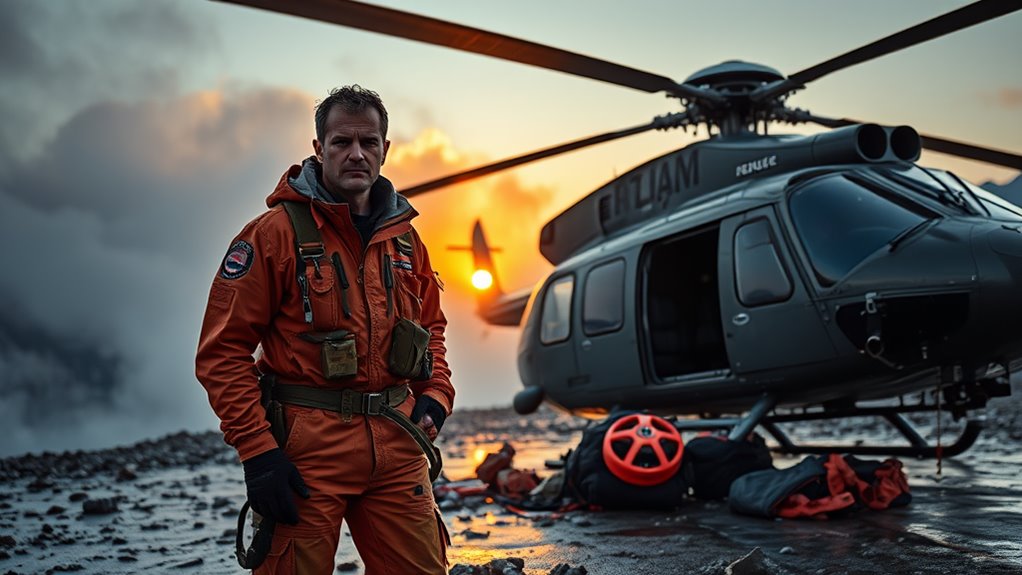
Search and rescue pilots embody exceptional grit and determination in their mission to save lives. They face severe weather, poor visibility, and high-stakes situations that require quick decision-making and expert coordination with ground teams. Their rigorous training combines technical flying skills with mental resilience and adaptability. These pilots navigate treacherous conditions, showcasing not only their flying prowess but also their emotional strength amid life-or-death scenarios. Each successful rescue reflects their commitment to community safety and well-being. Learn about the remarkable stories behind these courageous individuals and the innovative techniques they employ to overcome challenges.
The Role of Search and Rescue Pilots
Search and rescue pilots frequently play a critical role in emergency response operations, utilizing their specialized training and skills to locate and assist individuals in distress. These pilots are tasked with multifaceted responsibilities that extend beyond mere flight operations. Their roles are intricately linked to mission coordination, where effective communication and strategic planning are paramount.
In the field, pilot responsibilities encompass a wide array of activities, including the evaluation of weather conditions, assessment of potential hazards, and integration of logistical support. This requires not just technical proficiency in flying but also an acute awareness of environmental variables and situational dynamics. Pilots must coordinate closely with ground teams, medical personnel, and other aerial resources to guarantee that rescue missions are executed efficiently and safely.
Moreover, search and rescue pilots are often called upon to make rapid decisions under pressure. The ability to assess a situation in real-time, coupled with the skill to navigate challenging terrains, is crucial for successful mission outcomes. Each operation demands a thorough comprehension of the specific rescue criteria, which can vary considerably based on the nature of the emergency, whether it be natural disasters, maritime incidents, or urban rescues.
Ultimately, the effectiveness of search and rescue pilots is not merely measured by their flying capabilities but also by their aptitude for collaboration and leadership during high-stakes scenarios. Their unwavering commitment to saving lives underscores the profound importance of their role within emergency response frameworks.
Training and Preparation for Challenges
Effective training and preparation are essential for search and rescue pilots to navigate the unique challenges they face in emergency operations. A thorough training regimen integrates both technical flying skills and critical survival techniques, ensuring that pilots are adept in various environments and scenarios. This multifaceted approach begins with rigorous simulator exercises that replicate emergency situations, allowing pilots to hone their decision-making abilities under pressure.
Pilots undergo extensive instruction in survival techniques, which encompass not only personal survival in hostile conditions but additionally the ability to assess and manage the well-being of rescued individuals. This training includes learning navigation skills in adverse terrain, first aid, and the use of survival gear, thereby equipping pilots with the tools necessary to confront unexpected difficulties.
Furthermore, the development of decision-making capabilities is paramount in the training process. Pilots are taught to analyze situations swiftly, weighing the risks and benefits of potential actions. This skill is particularly important in search and rescue missions, where time is often of the essence, and poor decisions can have dire consequences.
Regular scenario-based drills encourage an environment of critical thinking, pushing pilots to devise strategic solutions in real-time. These experiences cultivate not only technical proficiency but also the mental resilience required to face the unpredictability of search and rescue operations. In the end, thorough training and preparation empower pilots to act decisively and effectively, embodying the grit and determination crucial for their important role in emergency response.
Facing Adverse Weather Conditions
Search and rescue pilots often encounter severe storms that challenge their ability to navigate safely. Adverse weather conditions can greatly impair visibility, complicating mission execution and decision-making. Comprehending how to manage these obstacles is essential for the success and safety of search and rescue operations.
Navigating Severe Storms
While traversing severe storms presents significant challenges, pilots in search and rescue operations must employ advanced techniques to guarantee safety and efficacy. Mastery of storm survival is critical, as these pilots navigate through unpredictable and often violent weather conditions. Utilizing a combination of state-of-the-art technology and time-tested navigation tactics, they can effectively mitigate the risks associated with severe storms.
Pilots are trained to interpret weather data and radar information to identify safe flight paths. They employ techniques such as altitude adjustments to avoid the worst turbulence and severe downdrafts, thereby maintaining control of the aircraft. Additionally, comprehending wind shear and recognizing the signs of microbursts are vital skills that improve decision-making during critical moments.
Effective communication with ground control and other aircraft is paramount, as it aids in collective storm avoidance strategies. Pilots likewise rely on real-time updates to refine their navigation tactics, ensuring they remain responsive to swiftly changing conditions. Ultimately, the grit and determination of search and rescue pilots in the face of severe storms exemplify their commitment to saving lives, underscoring the importance of precision in their operational procedures.
Visibility Challenges Ahead
Adverse weather conditions often present substantial visibility challenges for search and rescue pilots, greatly impacting their operational effectiveness. In particular, fog navigation can severely hinder pilots' ability to assess their surroundings, making it increasingly difficult to locate individuals in distress or navigate toward safe landing zones. The inability to discern terrain features, obstacles, or the positions of other aircraft can lead to heightened risks during missions.
To combat these challenges, search and rescue pilots often rely on specialized visibility gear, such as advanced radar systems and infrared imaging technologies. These tools improve situational awareness, enabling pilots to penetrate dense fog and low visibility scenarios. Additionally, rigorous training in instrument flight rules (IFR) equips pilots with the necessary skills to operate effectively in such adverse conditions.
Ultimately, the combination of state-of-the-art technology and extensive training allows search and rescue pilots to mitigate the risks presented by compromised visibility. Their unwavering determination to overcome these challenges exemplifies their commitment to saving lives, even when nature conspires against them. Comprehending the intricacies of fog navigation and the use of visibility gear is vital for maintaining operational integrity in search and rescue missions.
Notable Rescue Missions and Stories
Throughout history, numerous remarkable rescue missions have showcased the bravery and expertise of search and rescue pilots. These heroic rescues often unfold under the most harrowing conditions, where the stakes are life and death, demanding not merely technical skill but additionally an unwavering commitment to saving lives. One such notable mission occurred in 2010 when a search and rescue pilot navigated treacherous weather to locate a group of stranded hikers in the Sierra Nevada mountains. Their survival story became a proof of the dedication and quick decision-making required in these high-pressure situations.
Another poignant example is the daring rescue of a sailor stranded at sea during a violent storm. The pilot, flying into fierce winds and turbulent waves, executed a daring hoist operation that finally saved the sailor's life. This mission exemplified the pilots' ability to combine their extensive training with instinctual responses in critical moments.
Moreover, in the aftermath of natural disasters, such as hurricanes or earthquakes, search and rescue pilots play a pivotal role in locating and extracting survivors from debris. Their efforts yield countless survival stories, highlighting the profound impact of their work on countless lives.
These missions not only exemplify technical prowess but additionally underscore the human spirit's resilience in the face of adversity. Each rescue is a narrative of courage, underscoring the crucial role that search and rescue pilots play in our society, transforming perilous situations into stories of hope and survival.
The Mental and Emotional Toll
The high-stakes environment of search and rescue missions imposes a significant mental and emotional toll on pilots who operate under extreme pressure. Each mission demands not only technical proficiency but also an exceptional degree of psychological resilience. Pilots frequently confront life-and-death scenarios, where the burden of responsibility for the lives of others can weigh heavily on their minds. The acute awareness of potential failure can lead to heightened levels of stress and anxiety, which, if unaddressed, may contribute to long-term mental health issues.
To navigate this demanding terrain, emotional support systems are critical. These include peer support networks, access to mental health professionals, and structured debriefing sessions that allow pilots to process their experiences. Additionally, organizations increasingly recognize the importance of cultivating a culture that prioritizes mental well-being, encouraging open discussions about emotional challenges faced during missions. This proactive approach not only helps in mitigating the adverse effects of stress but also improves overall operational effectiveness.
As pilots develop their psychological resilience, they learn to manage their emotions, transforming potentially debilitating stress into a source of motivation and focus. Training programs that integrate mental preparedness alongside technical skills are vital for equipping search and rescue pilots to handle the emotional intricacies inherent in their work. In the end, recognizing and addressing the mental and emotional toll of these missions is imperative for sustaining the effectiveness and well-being of those who serve in this demanding but noble field.
The Future of Search and Rescue Aviation
As search and rescue aviation evolves, advancements in technology promise to improve operational efficiency and effectiveness. Improved training programs will be essential in preparing pilots and crews to adapt to these innovations. In addition, collaborative international efforts can facilitate knowledge sharing and resource optimization, in the end enhancing rescue outcomes worldwide.
Advancements in Technology
Emerging technologies are poised to transform search and rescue aviation, improving both efficiency and effectiveness in emergency operations. Drones integration is revolutionizing the field, allowing for real-time situational awareness through satellite imagery and remote sensing. Automation advancements streamline mission planning and execution, reducing response times considerably.
The integration of wearable technology enables pilots and rescue teams to monitor crucial signs and environmental parameters, facilitating informed decision-making during critical missions. Data analytics, driven by AI algorithms, further improves operational effectiveness by predicting potential rescue scenarios and resource allocation.
Additionally, augmented reality (AR) is being employed to provide pilots with improved visualizations of terrain and obstacles, as well as thermal imaging technology that allows for the detection of heat signatures in adverse conditions.
| Technology | Application |
|---|---|
| Drones Integration | Aerial reconnaissance and mapping |
| Wearable Technology | Monitoring health and environmental data |
| AI Algorithms | Predictive analysis for resource management |
As these technologies continue to evolve, search and rescue operations will become increasingly sophisticated, ensuring that lives are saved more efficiently than ever before.
Enhanced Training Programs
Improved training programs are essential for equipping search and rescue pilots with the skills necessary to navigate the intricacies of modern emergency operations. As the environment of rescue missions evolves, so too must the training protocols that prepare pilots for complex scenarios. Augmented training programs emphasize a multifaceted approach, integrating advanced techniques and technologies.
Key components of these training programs include:
- Simulator Training: High-fidelity simulators replicate real-world conditions, allowing pilots to practice critical decision-making in a controlled environment.
- Teamwork Exercises: Collaborative drills promote synergy among crew members, improving communication and coordination during high-pressure situations.
- Scenario-Based Learning: Pilots engage in diverse, realistic scenarios that reflect contemporary challenges, ensuring they are adept at adapting to unexpected developments.
- Continuous Assessment: Ongoing evaluations provide constructive feedback, enabling pilots to refine their skills and adapt to new technologies and methodologies.
Collaborative International Efforts
As the challenges of search and rescue operations continue to grow in complexity, collaborative international efforts are increasingly recognized as crucial for improving the effectiveness and efficiency of aviation response teams. The constantly changing environment of emergencies—ranging from natural disasters to maritime incidents—demands a cohesive and integrated approach, leveraging the strengths of various nations through strategic international partnerships.
These partnerships facilitate resource sharing, allowing countries to pool their technological assets, trained personnel, and operational expertise. For instance, joint exercises and simulations promote a deeper comprehension of diverse operational protocols, ensuring seamless interoperability during actual missions. Additionally, such collaborations enable nations to address logistical challenges, minimizing response times and maximizing the impact of their efforts.
Investing in robust communication networks and shared databases improves situational awareness, allowing aircrews to access real-time information on weather patterns, terrain challenges, and potential hazards. Ultimately, the future of search and rescue aviation hinges on these collaborative international efforts, transforming the way nations respond to crises and reinforcing a global commitment to saving lives in the face of adversity.
Frequently Asked Questions
What Qualifications Are Needed to Become a Search and Rescue Pilot?
To become a search and rescue pilot, individuals must complete extensive flight training, obtaining a commercial pilot's license and additional certifications specific to search and rescue operations. Proficiency in emergency protocols is vital, as pilots must navigate unpredictable and challenging environments. Additional qualifications may include specialized training in survival techniques, navigation systems, and teamwork skills, enabling effective coordination with rescue teams. Continuous education and experience are fundamental for honing the intricacies of this demanding role.
How Do Search and Rescue Pilots Handle Stress During Missions?
Steering through the tempest of high-stakes missions resembles a skilled sailor guiding through turbulent seas. Search and rescue pilots employ rigorous stress management techniques, akin to a ship's crew maintaining course amidst storms. They cultivate mission resilience through thorough training, mental conditioning, and teamwork, ensuring a calm demeanor under pressure. By embracing challenges as opportunities for growth, these aviators transform stress into a driving force, allowing them to execute life-saving operations with precision and confidence.
What Type of Aircraft Do Search and Rescue Teams Use?
Search and rescue teams employ a variety of aircraft, primarily focusing on helicopters because of their superior capabilities for rapid deployment and maneuverability in challenging environments. The selection of aircraft is influenced by factors such as operational range, payload capacity, and the specific nature of the mission. Fixed-wing aircraft may likewise be utilized for extensive searches, but helicopters remain the preferred choice for their versatility and ability to access remote or hazardous locations effectively.
How Do Pilots Stay Updated on Search and Rescue Technology?
In a setting where technology swiftly evolves, pilots must balance traditional skills with modern innovations. To stay current on search and rescue technology advancements, they engage in rigorous training programs that encompass both theoretical knowledge and practical application. These programs often include simulations of real-time scenarios, ensuring that pilots are adept in utilizing the latest equipment and techniques. This dual approach improves their effectiveness in critical missions, ultimately saving lives in challenging circumstances.
What Is the Average Salary of a Search and Rescue Pilot?
The average salary of a search and rescue pilot varies considerably based on several salary factors, including experience, location, and the type of organization employing them. Typically, salaries range from $60,000 to $120,000 annually. The career outlook for search and rescue pilots remains positive, driven by the increasing demand for emergency response services and advancements in aviation technology, which improve operational efficiency and safety in rescue missions.
