
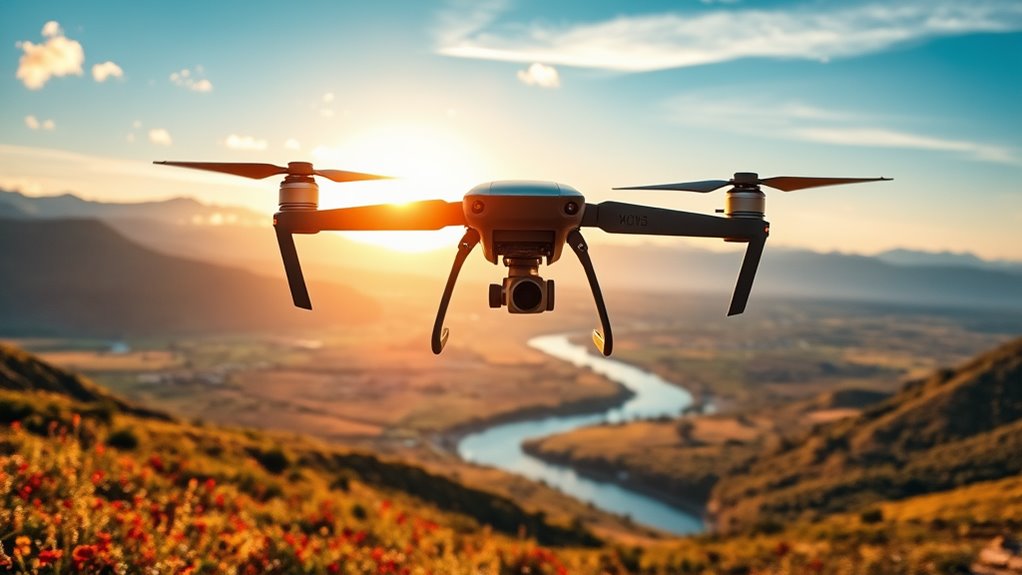
Drones are redefining the boundaries of flight by broadening their roles across various sectors, from agriculture to emergency services. Their technological advancements, such as improved navigation systems and better battery life, have enabled precision agriculture, streamlined delivery services, and efficient search and rescue operations. These innovations allow drones to collect critical data, boost operational efficiency, and even monitor environmental changes. As their applications grow, so do regulatory challenges that necessitate uniform guidelines for their use. The ongoing evolution of drone technology promises to further transform aviation and industry practices, providing insights into future trends and opportunities ahead.
Evolution of Drone Technology
Historically, drone technology has evolved considerably, shifting from military applications to a broad spectrum of civilian uses. Initially developed for reconnaissance and combat, these unmanned aerial systems have undergone significant transformation, driven by rapid technological advancements. The early iterations of drones were primarily characterized by their rudimentary design and limited functionality. Nevertheless, as innovations in materials science, miniaturization, and battery technology emerged, the capabilities of drones expanded dramatically.
Technological breakthroughs, such as the integration of GPS and advanced sensors, have enabled drones to perform complex tasks with remarkable precision. The development of autonomous navigation systems has further improved their operational efficiency, allowing for applications ranging from aerial photography to environmental monitoring. Moreover, advancements in artificial intelligence are ushering in an era where drones can analyze data in real-time, facilitating informed decision-making across various sectors.
The evolution of drone technology has likewise been marked by the democratization of access. As manufacturers have refined production methods and reduced costs, a diverse array of consumer-grade drones has entered the market, empowering hobbyists and professionals alike. This shift has not only transformed industries but has likewise raised important regulatory and ethical considerations regarding airspace management and privacy.
Commercial Applications of Drones
The commercial applications of drones are revolutionizing various industries, particularly in delivery services, agriculture, and infrastructure inspection. These innovations improve efficiency, reduce costs, and improve data collection, finally transforming traditional practices. As businesses increasingly integrate drone technology, the potential for growth and optimization continues to expand.
Delivery Services Transformation
Drones are revolutionizing the delivery services arena, offering businesses a swift and efficient means of transporting goods. This transformation is particularly evident in urban logistics, where the demand for last mile solutions continues to grow. The integration of drone technology into delivery systems presents several essential advantages:
- Enhanced Speed: Drones can maneuver directly to destinations, bypassing congested roads.
- Reduced Environmental Impact: Electric drones produce lower emissions compared to traditional delivery vehicles.
- Real-Time Tracking: Advanced aerial maneuvering systems enable precise tracking of deliveries, promoting consumer transparency.
- Increased Payload Capacity: Innovations in drone design allow for the transport of various goods, catering to diverse market needs.
However, the successful implementation of drone delivery hinges on addressing key challenges, such as ensuring drone safety and steering through complex regulatory frameworks. Moreover, promoting consumer acceptance is vital to the widespread adoption of this technology. As businesses continue to embrace technological integration, the potential for drones to redefine delivery services becomes increasingly apparent, paving the way for a more efficient and sustainable future in logistics.
Agriculture and Crop Monitoring
Revolutionizing agricultural practices, drones are increasingly being utilized for crop monitoring and management. These aerial systems facilitate precision agriculture by providing accurate data through aerial imaging, enhancing crop surveillance capabilities. This technology empowers farmers to conduct soil analysis, which is crucial for informed decision-making regarding resource optimization.
Drones are particularly effective in yield mapping, enabling farmers to assess crop health and predict yields with greater accuracy. Furthermore, they play an essential role in pest management, employing advanced imaging techniques to detect infestations early and minimize crop loss. The integration of these technologies greatly boosts farm efficiency, allowing for timely interventions and strategic planning.
| Application | Benefits | Technology Used |
|---|---|---|
| Crop Surveillance | Early detection of issues | Aerial Imaging |
| Soil Analysis | Informed resource management | Spectral Sensors |
| Yield Mapping | Accurate yield predictions | Data Analytics |
As drones continue to evolve, their contributions to agriculture will become increasingly crucial, ensuring sustainable practices and maximizing productivity in an ever-demanding market.
Infrastructure Inspection Innovations
As industries seek more efficient methods for maintaining and monitoring infrastructure, the adoption of drones for inspection purposes has emerged as a transformative solution. These aerial vehicles improve inspection accuracy and facilitate thorough data analysis, thereby ensuring regulatory compliance and elevating infrastructure resilience. Key innovations in drone technology for infrastructure inspection include:
- Aerial Surveying: Drones provide high-resolution imagery and detailed topographic data, enabling precise assessments of structural integrity.
- Environmental Monitoring: Drones can monitor environmental conditions affecting infrastructure, ensuring proactive maintenance scheduling.
- Safety Protocols: Utilizing drones reduces the need for human inspectors in hazardous environments, greatly improving safety.
- Real-time Data Collection: Drones facilitate immediate data analysis, allowing for rapid decision-making and timely interventions.
These capabilities not only streamline the inspection process but contribute to more effective maintenance strategies. Consequently, industries can mitigate risks associated with aging infrastructure and optimize resource allocation, ultimately promoting a more sustainable and resilient infrastructure environment. The integration of drones into inspection protocols signifies a pivotal shift toward more advanced, data-driven methodologies in infrastructure management.
Drones in Agriculture
The agricultural sector is experiencing a significant transformation, largely due to the integration of aerial technology. Drones are at the forefront of this evolution, enabling precision farming practices that optimize resource utilization and improve crop productivity. Through aerial mapping and remote sensing, farmers can gain critical insights into soil health and crop conditions, allowing for data-driven decision-making.
These unmanned aerial vehicles (UAVs) facilitate extensive yield analysis, identifying variations across fields that may require customized intervention. By employing advanced data analytics, farmers can assess crop health and monitor the effectiveness of pest management strategies, ensuring timely responses to potential threats. Additionally, drones have changed crop spraying techniques, allowing for precise application of fertilizers and pesticides, thereby minimizing waste and environmental impact.
The integration of drones into agricultural operations similarly bolsters farm efficiency by streamlining processes and reducing labor costs. This technology encourages sustainable practices, as it promotes the judicious use of inputs and reduces the carbon footprint associated with traditional farming methods.
As the agricultural environment continues to evolve, the utilization of drones will certainly play a pivotal role in addressing the challenges of food security and environmental sustainability. By leveraging the capabilities of aerial technology, farmers can not only improve their operational capabilities but also contribute to a more resilient and sustainable agricultural future.
Transforming Delivery Services
With the advent of drone technology, delivery services are undergoing a profound transformation that improves speed and efficiency. As urban logistics evolve, drones emerge as pivotal last-mile solutions, promising to redefine the very nature of package delivery. Consider the following key advantages:
- Delivery Speed: Drones can greatly reduce transit times, enabling rapid fulfillment of consumer demands.
- Cost Efficiency: By minimizing ground transportation costs and reducing labor needs, drones present a financially viable alternative for businesses.
- Environmental Impact: Electric drones contribute to lower carbon emissions, aligning with global sustainability goals and improving urban air quality.
- Route Optimization: Advanced algorithms allow drones to select the most efficient flight paths, ensuring timely deliveries and conserving energy.
However, the integration of drones into delivery services is not without its challenges. Ensuring drone safety is paramount, necessitating robust regulatory compliance to build public trust. Furthermore, effective package tracking systems must be developed to provide real-time updates, enhancing consumer convenience. As these technologies mature, the implications for urban logistics are profound. Companies that leverage drone capabilities can offer unparalleled delivery speed and efficiency, ultimately reshaping consumer expectations.
As we navigate this transformative era, stakeholders must prioritize safety protocols and regulatory frameworks to fully realize the potential of drone delivery services. The future of logistics is here, and it is airborne.
Drones in Filmmaking and Photography
Drones have transformed aerial cinematography, enabling filmmakers to capture breathtaking visuals from previously unattainable angles. This technology not merely improves the storytelling process but additionally expands creative perspectives in photography, allowing artists to experiment with new compositions. As a result, drones are becoming indispensable tools in the visual arts, pushing the boundaries of traditional filmmaking.
Aerial Cinematography Innovations
Aerial cinematography has experienced a remarkable transformation in recent years, driven by advancements in drone technology. These innovations have not solely transformed the technical aspects of filmmaking but have additionally expanded the horizons of creative expression, enabling filmmakers to craft compelling aerial storytelling with unprecedented ease.
Key innovations include:
- Stabilization Technology: Improved gimbal systems guarantee smooth, cinematic shots, eliminating unwanted vibrations.
- High-Resolution Cameras: Drones equipped with 4K and 8K cameras capture stunning visuals, raising production quality.
- Automated Flight Paths: Advanced software allows for pre-programmed flight routes, enabling complex shots that were once labor-intensive.
- Real-time Monitoring: Live feeds to ground control improve decision-making, allowing for immediate adjustments to capture the perfect angle.
These advancements empower filmmakers to push the boundaries of traditional cinematography, engaging audiences in ways previously thought unattainable. The ease of access to aerial shots cultivates innovative approaches to visual storytelling, inviting creators to explore new dimensions of their craft. As drones continue to evolve, they promise to further enrich the environment of filmmaking, making aerial cinematography a vital tool for modern storytellers.
Expanding Creative Perspectives
The integration of drone technology into filmmaking and photography has fundamentally altered the creative atmosphere, offering artists new ways to visualize and interpret their subjects. This evolution facilitates artistic expression through aerial storytelling, enabling creators to capture sweeping vistas and intricate details that were once difficult to achieve. Drones provide new perspectives that improve narrative depth, allowing filmmakers to weave innovative concepts into their projects with unprecedented ease.
Through creative collaborations, artists can engage in design experimentation, merging aerial footage with traditional techniques to produce compelling visual narratives. This multimedia integration encourages visual exploration, leading to unique compositions that challenge conventional boundaries. As filmmakers and photographers utilize the versatility of drones, they reveal a domain of possibilities that nurtures originality and innovation.
Furthermore, the democratization of drone technology empowers emerging artists to contribute diverse viewpoints, enriching the creative environment. This influx of fresh talent and ideas propels the industry toward a future defined by imaginative storytelling and improved visual experiences. As the medium evolves, the potential for groundbreaking projects and transformative artistic endeavors remains boundless, reshaping the way stories are told and experienced.
Search and Rescue Operations
In recent years, advancements in drone technology have greatly transformed search and rescue operations, improving both efficiency and effectiveness. The integration of drones into emergency response frameworks has completely changed how teams coordinate their efforts in critical situations. Key capabilities of drones include:
- Aerial Surveillance: Drones provide real-time aerial views, enabling rapid assessment of disaster-stricken areas.
- Terrain Mapping: Utilizing advanced imaging technology, drones can create detailed maps of challenging terrains, facilitating operational planning.
- Victim Location: Equipped with thermal imaging and other sensors, drones can swiftly identify and locate victims, greatly reducing search times.
- Data Analysis: Real-time data collection and analysis from drones improves situational awareness, enabling informed decision-making during rescue operations.
The operational efficiency of search and rescue missions is greatly improved through enhanced team collaboration encouraged by real-time communication capabilities. Drones allow for seamless information sharing among rescue coordinators, ensuring that all team members are informed of the latest developments. Additionally, the precision and speed at which drones operate enable emergency responders to deploy resources more effectively, ultimately saving lives.
As rescue teams increasingly adopt drone capabilities, they are redefining traditional methodologies and setting new standards for emergency response. The synergy between aerial technology and ground operations not only accelerates victim location but also optimizes the overall rescue process. The future of search and rescue operations is bright, with drones at the forefront of innovation and operational excellence.
Regulatory Challenges and Solutions
Although the integration of drones into search and rescue operations has considerably improved efficiency and effectiveness, it additionally raises important regulatory challenges that must be addressed to guarantee safe and responsible use. Key among these challenges are licensing requirements, which vary markedly across jurisdictions, complicating the operational environment for drone operators. Establishing uniform airspace management protocols is vital to minimize conflicts between manned and unmanned aircraft, ensuring a cohesive approach to air traffic oversight.
Safety protocols must likewise evolve to accommodate the unique capabilities and risks associated with drone technology. The development and enforcement of robust technological standards will improve operational safety and reliability, thereby addressing public perception concerns regarding drone usage. Moreover, privacy concerns remain paramount; as drones can inadvertently infringe on individuals' rights, clear regulations are necessary to protect personal privacy while utilizing the benefits of aerial technology.
International regulations present another layer of complexity, as the global nature of drone operations necessitates harmonization of standards to facilitate cross-border activities. Industry collaboration is fundamental to navigate compliance challenges, nurturing partnerships among stakeholders to promote best practices. Effective enforcement strategies must be implemented to guarantee adherence to established guidelines, thereby reinforcing accountability within the industry.
Ultimately, addressing these regulatory challenges is vital for the sustainable integration of drones into various sectors, including search and rescue. A proactive approach will not only improve safety and efficiency but additionally build public trust in this transformative technology.
Innovations in Drone Design
Frequently, advancements in drone design are reshaping the terrain of aerial technology, improving both functionality and versatility. These innovations are essential in addressing the evolving demands of various industries, from logistics to surveillance. Significantly, several key trends are emerging:
- Foldable Drones: These compact designs facilitate portability, enabling seamless transport and deployment in diverse environments.
- Hybrid Designs: Integrating both fixed-wing and rotary capabilities, hybrid drones optimize flight efficiency and operational range.
- AI Integration: The incorporation of artificial intelligence improves autonomous navigation, allowing drones to make real-time decisions based on environmental data.
- Materials Innovation: Advanced materials contribute to improved durability and reduced weight, further elevating performance metrics.
Furthermore, battery technology has seen significant advancements, extending flight times and reducing downtime for recharging. Innovations in noise reduction technologies are likewise essential, making drones suitable for urban applications where discretion is paramount.
Moreover, the aesthetic appeal of drones is becoming increasingly relevant, as manufacturers recognize the importance of design in user acceptance and brand differentiation. The use of modular components is another remarkable trend, allowing for customizable configurations designed for specific missions, thereby improving versatility. Finally, the integration of advanced safety features guarantees compliance with regulations and promotes public trust in drone operations.
Future of Drone Aviation
As drone technology continues to advance, the future of drone aviation promises to transform various sectors, enhancing efficiency and safety. One of the most anticipated developments is urban air mobility (UAM), which envisions a network of flying vehicles that can alleviate traffic congestion and provide rapid transit solutions in metropolitan areas. This paradigm shift will necessitate robust drone regulations to guarantee safety and integration into existing air traffic systems.
Key advancements driving the future of drone aviation include:
| Aspect | Current Status | Future Outlook |
|---|---|---|
| Urban Air Mobility | Limited trials underway | Widespread adoption in cities |
| Regulatory Framework | Fragmented and evolving | Harmonized global standards |
| Technological Integration | Primarily standalone drones | Fully integrated with smart city infrastructure |
The evolution of drone regulations will play a pivotal role in shaping the environment of UAM. As regulatory bodies adapt to the rapid development of drone technology, they will establish guidelines that assure airspace safety, privacy, and security. The successful implementation of these regulations will enable seamless operations, promoting public trust and acceptance.
Frequently Asked Questions
What Are the Environmental Impacts of Drone Usage?
The environmental impacts of drone usage warrant careful consideration. Drone emissions contribute to air pollution, albeit to a lesser extent than traditional aircraft, but their cumulative effects cannot be overlooked. Furthermore, noise pollution from drone operations can disrupt ecosystems, leading to wildlife disturbances that may adversely affect biodiversity. Comprehending these factors is essential for developing regulations that mitigate negative environmental consequences during the promotion of the beneficial applications of drone technology in various sectors.
How Do Drones Affect Traditional Aviation Industries?
Drones greatly impact traditional aviation industries by introducing new services such as drone delivery and enhancing aerial photography capabilities. This shift requires established companies to adapt their business models and integrate drone technology to remain competitive. Additionally, the regulatory environment is evolving, prompting traditional aviation sectors to collaborate with drone innovators. As a result, the intersection of these technologies not only optimizes operational efficiencies but likewise creates new market opportunities within the aviation ecosystem.
What Skills Are Needed to Operate Drones Effectively?
Operating drones effectively requires a blend of technical expertise and regulatory comprehension, akin to a maestro conducting a symphony. Mastery in drone navigation guarantees precise control amidst varying terrains, whereas a thorough grasp of flight regulations assures compliance with safety standards. Pilots must develop spatial awareness, problem-solving skills, and an aptitude for technology, enabling them to navigate the skies with both confidence and responsibility, ultimately enhancing their operational capabilities to new heights. Furthermore, the ability to adapt to unforeseen circumstances is crucial for drone pilots, especially when considering how pilots handle severe weather. Inclement conditions can significantly challenge even the most skilled operators, requiring quick thinking and adaptability to ensure safe operations. Continuous training and simulation exercises are invaluable in preparing pilots to face these adversities, fostering resilience and promoting best practices in varied environments.
How Do Drones Ensure Safety During Flights?
Drones guarantee safety during flights through rigorous adherence to flight regulations and inventive drone technology. Advanced systems, including GPS navigation, collision avoidance sensors, and real-time data communication, greatly mitigate risks. Operators are trained to understand and comply with regulatory frameworks, which dictate flight altitudes, no-fly zones, and operational protocols. This combination of regulatory compliance and state-of-the-art technology promotes a safer aerial environment, ultimately improving the reliability and efficiency of drone operations.
What Are the Ethical Considerations of Drone Surveillance?
Drone surveillance operates like a watchful eye in the sky, raising significant ethical considerations. Central to this discourse are privacy concerns and data security, where the balance between monitoring and individual rights becomes precarious. The potential for unauthorized data collection and intrusive observation poses risks, necessitating robust regulatory frameworks. As technology advances, it is imperative that ethical guidelines evolve to safeguard personal liberties as well as utilizing the benefits of aerial oversight, ensuring accountability and transparency.
