
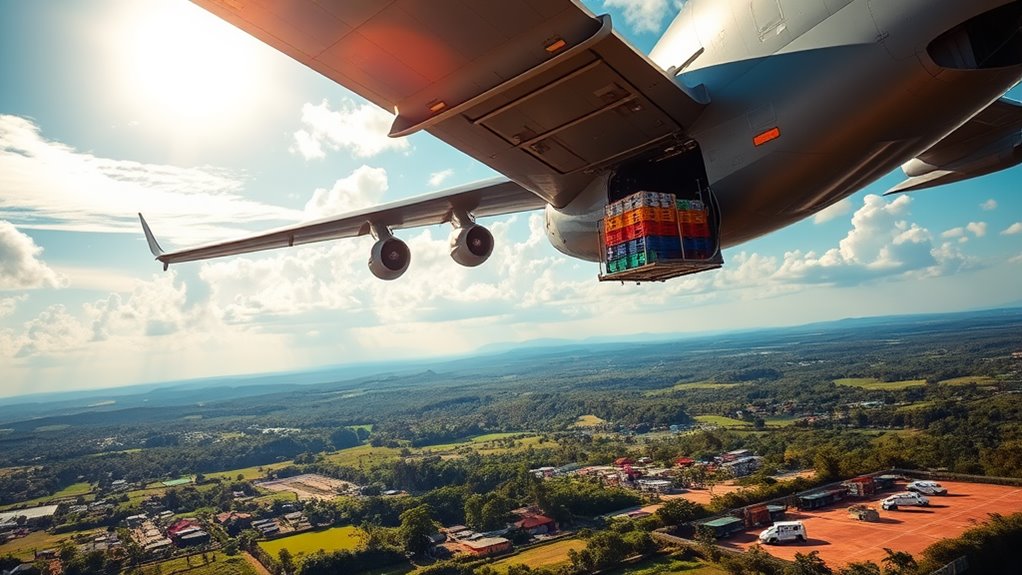
Cargo planes play a crucial role in delivering lifesaving supplies swiftly during global crises. They transport fundamental medical items, food, and sanitation resources to disaster-stricken areas, particularly where land access is impossible. Various types of cargo aircraft, including wide-body freighters and specialized planes, are used based on the mission's needs. Effective logistics and coordination among NGOs and governments guarantee timely delivery, even though challenges like customs delays and adverse weather complicate operations. As technology evolves, strategies improve efficiency and response capabilities. Uncovering the intricacies of these operations reveals even more about the humanitarian airlift system's impact.
The Role of Cargo Planes
Cargo planes play a crucial role in humanitarian efforts, acting as the lifeline for communities in need during crises. Their capacity to transport large quantities of vital supplies swiftly and efficiently is unparalleled, especially when conventional transportation infrastructures are compromised. In scenarios such as natural disasters, disease outbreaks, or conflict situations, timely delivery of assistance can greatly mitigate suffering, demonstrating the profound humanitarian impact of air freight operations.
The significance of cargo planes extends beyond mere logistics; they facilitate global connectivity among humanitarian organizations, governments, and affected populations. By bridging geographical gaps, these aircraft guarantee that aid reaches even the most remote and inaccessible areas, where traditional ground transportation may fail. Their operational flexibility allows for rapid deployment, adapting to the dynamic needs of crisis response and assuring that lifesaving supplies are delivered without delay, thereby enhancing the efficacy of humanitarian interventions.
Moreover, the integration of cargo planes into a broader supply chain strategy amplifies the reach of humanitarian efforts. As organizations increasingly rely on air cargo to maintain continuity in their operations, the importance of establishing robust partnerships with airlines and logistics providers becomes evident. This collaboration promotes a more resilient and responsive infrastructure, ultimately enhancing the capacity to address emergencies as they arise.
Types of Lifesaving Supplies
Numerous types of lifesaving supplies are essential in humanitarian crises, each customized to meet the specific needs of affected populations. Among these, medical supplies play a pivotal role in addressing immediate health concerns. Key items include bandages, antiseptics, and medications such as antibiotics and analgesics, which are vital for treating injuries and preventing infections in disaster-stricken areas. Additionally, advanced supplies like surgical kits and intravenous fluids are critical for more severe medical emergencies that can arise in chaotic environments.
In addition to medical supplies, personal protective equipment (PPE) such as masks, gloves, and gowns is indispensable for healthcare workers responding to crises, particularly in scenarios involving contagious diseases. The need for such equipment is amplified in disasters where the risk of disease transmission is heightened.
Another category of lifesaving supplies includes nutritional support, such as ready-to-use therapeutic foods and oral rehydration solutions, which are fundamental for combating malnutrition and dehydration in vulnerable populations, especially children and the elderly.
Water purification systems and sanitation kits are also integral to disaster relief efforts, as they help prevent waterborne diseases and guarantee access to clean drinking water, which is often compromised in the aftermath of disasters.
Collectively, these supplies form the cornerstone of effective disaster response, facilitating not just immediate relief but also the longer-term recovery of affected communities. Comprehending the specific requirements of each crisis is paramount for optimizing the impact of these lifesaving interventions.
Logistics of Emergency Deliveries
Effective distribution of lifesaving supplies requires a well-coordinated logistics framework, particularly in emergency situations where time is of the essence. The logistics of emergency deliveries hinges on a robust supply chain, designed to respond swiftly and efficiently to disasters. This multifaceted process involves careful planning, real-time data management, and seamless collaboration among various stakeholders, including governments, non-governmental organizations, and private sector partners.
In the context of disaster response, the supply chain must be agile and adaptable. Key components include the identification of crucial needs, sourcing of supplies, and the deployment of cargo planes capable of reaching affected areas quickly. A well-established network of distribution centers and pre-positioned stockpiles can greatly improve response times, allowing for immediate access to necessary goods such as medical supplies, food, and water.
Moreover, effective communication channels are crucial for coordinating efforts across multiple organizations. The use of advanced tracking and inventory management systems guarantees that resources are allocated efficiently, minimizing waste and maximizing impact. In addition, the integration of technology, such as geographic information systems (GIS), enables responders to assess damage and prioritize delivery routes based on real-time conditions.
Ultimately, the logistics of emergency deliveries plays a critical role in mitigating the effects of disasters. By optimizing the supply chain and promoting collaboration among diverse entities, lifesaving supplies can reach those in need, transforming the logistics of response into a lifeline for affected communities.
Challenges Faced by Cargo Aircraft
Five key challenges confront cargo aircraft during emergency supply operations. These challenges not only hinder the timely delivery of essential supplies but also necessitate strategic planning and resource allocation.
- Fuel Efficiency: In emergency scenarios, maximizing fuel consumption is vital. Longer routes or unexpected detours can drastically increase operational costs and reduce cargo capacity.
- Maintenance Issues: The reliability of cargo aircraft is significant; nonetheless, maintenance issues can arise unexpectedly. Aircraft must be in peak condition, and any mechanical failures can lead to delays in urgent deliveries.
- Weather Conditions: Adverse weather can severely impact flight schedules and safety. Maneuvering through storms, turbulence, or poor visibility requires careful consideration and may necessitate alternative routes.
- Regulatory Hurdles: Compliance with international aviation regulations can complicate emergency operations. Different countries have varying rules regarding cargo transport, necessitating thorough planning to avoid legal pitfalls.
Technological advancements have the potential to mitigate some of these challenges. Innovations in fuel efficiency can improve operational capabilities, while enhanced maintenance tracking systems can guarantee aircraft remain airworthy. Nevertheless, overcoming these obstacles requires a harmonized effort between technological solutions and strong logistical frameworks.
Teams Behind the Operations
Successful emergency supply operations rely heavily on the dedicated teams that coordinate every aspect of the mission. These teams, comprised of logistics experts, pilots, ground crew, and communications personnel, operate in a highly synchronized manner to guarantee that critical supplies reach their destinations without delay. Their commitment to crew coordination is paramount, as even minor misalignments can lead to significant operational setbacks, particularly in high-stakes environments where time is of the essence.
Operational efficiency is the cornerstone of these missions. To achieve this, teams employ sophisticated planning and real-time data analytics to optimize flight paths, manage load capacities, and synchronize with local receiving agencies. Each member of the team understands their role and the importance of seamless communication. Regular drills and simulations improve their preparedness, allowing them to respond swiftly to dynamic situations typical in emergency scenarios.
Furthermore, these teams engage in continuous training to stay abreast of the latest technologies and methodologies in logistics and supply chain management. They cultivate partnerships with various organizations, such as non-profits and government agencies, to streamline processes and share resources. This collaboration not only strengthens their operational capacity but also reinforces a collective commitment to humanitarian assistance.
Frequently Asked Questions
How Do Cargo Planes Differ From Passenger Planes?
Cargo planes differ from passenger planes primarily in their design and function. They possess larger freight capacity to accommodate substantial loads, utilizing specialized cargo configurations that optimize space for various types of goods. Unlike passenger planes, which prioritize comfort and amenities, cargo aircraft focus on efficiency and the safe transport of freight. This distinction enables cargo planes to serve critical logistical roles in global supply chains, especially for large or heavy shipments.
What Types of Aircraft Are Commonly Used for Cargo Transport?
Approximately 60% of global air freight is transported by dedicated cargo aircraft, highlighting their critical role in logistics. Common types of aircraft used for cargo transport include the Boeing 747 Freighter, Airbus A330 Freighter, and Lockheed Martin C-130 Hercules. These planes are designed with significant freight capacity and specialized loading techniques, enabling efficient loading and unloading, thereby optimizing supply chain operations and enhancing the overall effectiveness of air cargo transportation.
Are Cargo Planes Used in Commercial Deliveries as Well?
Yes, cargo planes are extensively utilized in commercial deliveries, facilitating efficient cargo logistics across various freight routes. These aircraft are designed to transport a wide range of goods, from consumer products to industrial equipment, ensuring timely delivery to meet market demands. The integration of air transport in commercial supply chains boosts the speed and reliability of logistics operations, thereby optimizing inventory management and improving overall customer satisfaction in a competitive marketplace.
How Are Cargo Planes Maintained for Safety?
The safety of cargo planes is paramount, as their reliability can mean the difference between life and death in critical situations. Rigorous maintenance protocols are implemented to guarantee peak performance and safety. This includes regular safety inspections that scrutinize every aspect of the aircraft, from structural integrity to avionics systems. Adhering to these stringent measures not just improves operational safety but additionally cultivates confidence in the crucial role cargo planes play in global logistics.
What Is the Environmental Impact of Cargo Flights?
The environmental impact of cargo flights is significant, primarily because of carbon emissions and noise pollution. Cargo planes contribute to greenhouse gas emissions, exacerbating climate change and affecting air quality. Furthermore, the noise generated by these aircraft can disrupt local communities and wildlife, leading to adverse health effects and ecological disturbances. Mitigating these impacts requires the adoption of more sustainable aviation practices, including advancements in aircraft technology and alternative fuels. The rise of electric aviation presents a promising avenue for reducing the environmental footprint of cargo flights. By harnessing electric propulsion systems, cargo planes can significantly decrease both carbon emissions and noise pollution, offering a quieter and cleaner alternative to traditional aircraft. Additionally, investment in electric aviation infrastructure and battery technology will be essential to support this transition and ensure a more sustainable future for the logistics industry.
