
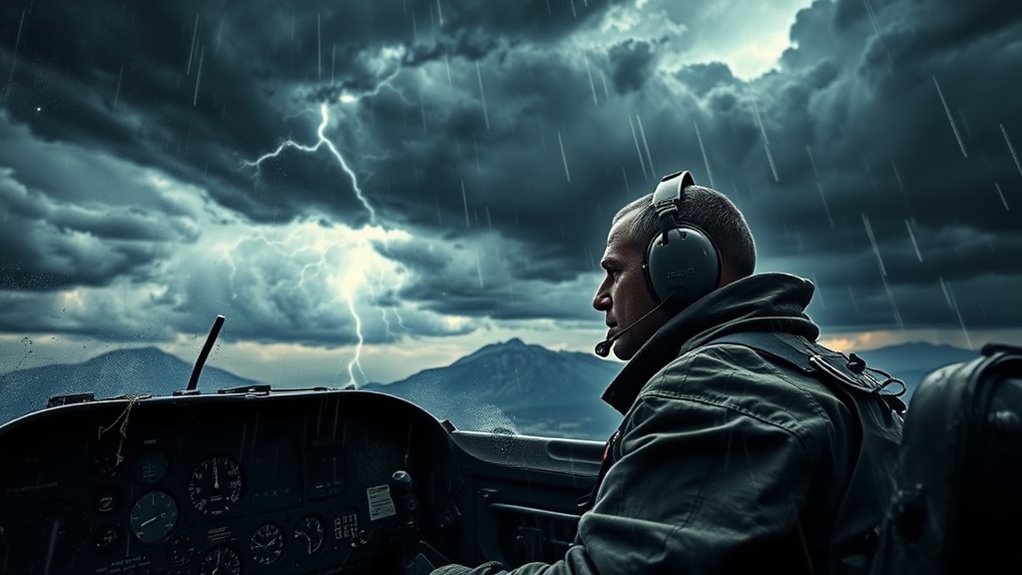
Flying in hostile environments poses significant challenges, including severe weather conditions that impede navigation and decision-making. Mechanical failures can become critical because of accelerated wear from extreme temperatures. Pilots must navigate intricate terrain as they identify hazards that could obstruct their flight path. Communication difficulties, often compounded by electronic interference or language barriers, can hinder coordination with ground control. Furthermore, threats from hostile forces necessitate heightened situational awareness and proactive security measures. Effective training and technological innovations are crucial for mitigating these risks. As pilots and crews adapt, they improve their skills and operational effectiveness, revealing more about the intricacies involved.
Weather-Related Challenges
Amidst the myriad factors influencing aviation safety, weather-related challenges stand out as particularly intimidating. The intricate interplay of atmospheric conditions poses considerable risks that demand a high level of expertise and situational awareness from pilots and air traffic controllers alike. Visibility conditions are paramount; low visibility can severely impede a pilot's ability to navigate and make informed decisions, especially during critical phases of flight.
The turbulence effects encountered in diverse storm patterns can lead to unpredictable aircraft behavior, necessitating a thorough comprehension of seasonal variations and their influence on local weather phenomena. In addition, atmospheric pressure changes can signal impending turbulence or severe weather, further complicating the flight experience.
Pilots must remain vigilant regarding icing risks, which can form on airfoil surfaces and considerably degrade performance. Temperature extremes can likewise challenge aircraft systems and affect fuel efficiency. Wind shear represents another formidable concern, as sudden changes in wind speed or direction can jeopardize the stability of the aircraft during takeoff and landing.
Microclimates, unique local weather patterns influenced by geographical features, can create localized hazards that are often difficult to predict. Moreover, radar limitations can hinder the detection of certain weather conditions, such as light precipitation or low-level turbulence, which may not be accurately represented on standard radar displays. Grasping and anticipating these weather-related challenges is crucial for ensuring safety in aviation operations, highlighting the necessity for continuous training and advanced meteorological knowledge among aviation professionals.
Mechanical Failures
Mechanical failures represent a significant challenge in aviation, particularly in hostile environments where conditions can exacerbate existing vulnerabilities. Comprehending the causes of these failures is vital, as their impact on flight safety can be profound and immediate. To mitigate risks, it is imperative to implement effective prevention and maintenance strategies that can improve aircraft reliability and operational readiness.
Causes of Mechanical Failures
Flying in hostile environments presents numerous challenges, with mechanical failures being a significant concern. The causes of these failures are multifaceted, often stemming from both intrinsic and extrinsic factors. Environmental stressors such as extreme temperatures, humidity, and corrosive elements can accelerate wear factors on crucial systems, particularly the fuel system and electrical components. These conditions challenge the structural integrity of aircraft, leading to potential component failures.
Design flaws in aircraft systems may additionally manifest under the strain of hostile conditions, resulting in unexpected breakdowns. Moreover, inadequate maintenance practices and lax inspection protocols can exacerbate these vulnerabilities, allowing minor issues to escalate into significant failures. Adherence to operational limits is important; pushing aircraft beyond their designed capabilities can precipitate catastrophic mechanical issues.
Ultimately, a thorough comprehension of these causes is indispensable for developing strategies to mitigate risks associated with mechanical failures. By emphasizing rigorous inspection protocols, robust maintenance practices, and an awareness of environmental impacts, the aviation industry can improve aircraft reliability, ensuring safer operations in challenging environments.
Impact on Flight Safety
The implications of mechanical failures on flight safety are profound and multifaceted. Such failures can compromise not only the aircraft's structural integrity but additionally the effectiveness of critical systems, leading to catastrophic outcomes. In hostile environments, where external conditions can exacerbate mechanical issues, the need for rigorous risk assessment becomes paramount.
Crew dynamics play a pivotal role in addressing mechanical failures. The ability of the flight crew to communicate effectively and make swift decisions under pressure can greatly influence the outcome of an in-flight emergency. A cohesive team that grasps each member's strengths can identify and mitigate risks associated with mechanical malfunctions. Conversely, poor crew dynamics can exacerbate stress, leading to increased likelihood of errors during critical situations.
Furthermore, the unpredictability of hostile environments necessitates a proactive approach to mechanical integrity, ensuring that all systems are regularly evaluated and maintained. The interplay between mechanical reliability and crew performance underscores the importance of thorough training programs designed to prepare pilots and crew for high-stakes scenarios. In the end, a detailed comprehension of these dynamics is vital for enhancing flight safety in challenging conditions.
Prevention and Mitigation Strategies
Addressing mechanical failures in hostile environments requires a thorough strategy focused on prevention and mitigation. A detailed risk assessment is paramount to identify potential failure points within aircraft systems. This involves analyzing historical data, conducting regular inspections, and utilizing advanced diagnostic tools to monitor the health of critical components.
Moreover, establishing robust emergency protocols is fundamental for effective response during mechanical failures. Training personnel to recognize early warning signs and execute systematic procedures can greatly reduce the likelihood of catastrophic outcomes. Regular drills and simulations should be conducted to guarantee that all team members are well-versed in these protocols, thereby improving readiness.
Additionally, the implementation of redundancy in critical systems can serve as a vital line of defense. By confirming that backup systems are in place, the impact of a mechanical failure can be mitigated, allowing for continued operation or safe landing.
Finally, cultivating a culture of continuous improvement is essential. Encouraging feedback from pilots and maintenance crews can lead to the identification of systemic issues and the enhancement of existing strategies. Through these measures, organizations can greatly bolster their resilience against mechanical failures in hostile environments.
Navigating Terrain
Maneuvering through terrain in hostile environments requires advanced terrain mapping techniques to guarantee accurate positioning and route planning. Furthermore, weather conditions greatly impact maneuvering, necessitating real-time assessments to avoid hazardous situations. Identifying obstacles and hazards is essential for maintaining safety and operational efficiency during flight operations.
Terrain Mapping Techniques
Effective terrain mapping techniques are crucial for ensuring safe flight operations in hostile environments. These techniques not only improve situational awareness but as well facilitate informed decision-making during flight. The integration of advanced technologies such as satellite imagery and drone surveying has transformed the way pilots assess terrain.
- Satellite Imagery: This provides a high-resolution, bird's-eye view of the terrain, revealing critical features such as elevation changes, obstacles, and potential hazards that may not be visible from the cockpit.
- Drone Surveying: Drones equipped with LiDAR and cameras can capture detailed topographical data, enabling the creation of precise 3D models of the terrain. This allows for real-time adjustments to flight paths based on the latest terrain information.
- Geospatial Analysis: By leveraging GIS (Geographic Information Systems), pilots can analyze terrain data to identify safe routes, assess risks, and develop contingency plans for emergency scenarios.
These terrain mapping techniques provide an extensive grasp of the operational environment, in the end improving the safety and effectiveness of flight operations in challenging situations.
Weather Impacts on Navigation
In hostile environments, weather conditions considerably influence navigation, often complicating the already challenging task of flying in difficult terrain. Pilots must be adept at utilizing sophisticated navigation tools, which can include GPS systems, terrain-following radar, and inertial navigation systems, to maintain situational awareness amidst swiftly changing weather patterns.
Weather forecasting plays a pivotal role in this situation, as accurate predictions can inform pilots of impending storms, turbulence, or low visibility that may obstruct their flight paths. Grasping meteorological phenomena is vital for effective navigation, particularly in areas where terrain features can exacerbate adverse weather effects, such as wind shear or localized precipitation.
Moreover, the integration of real-time weather data into navigation systems improves decision-making capabilities, enabling pilots to adjust their routes to circumvent hazardous conditions. This adaptability is fundamental for ensuring safety and operational efficiency in hostile environments. As a result, the interplay between weather impacts and navigation requires a sophisticated comprehension of both meteorology and the advanced tools available to modern aviators. Thus, mastery of these elements is indispensable for effective navigation in challenging scenarios, where every second counts and precision is paramount.
Obstacles and Hazards Identification
Identifying obstacles and hazards is vital for pilots operating in hostile environments, where rugged terrain can present significant challenges. A detailed hazard assessment is fundamental to guarantee flight safety and operational efficiency. The identification of terrain-related obstacles demands careful attention and involves several key considerations:
- Topographical Features: Mountains, cliffs, and valleys can obstruct flight paths and alter air currents, necessitating precise routing.
- Vegetation and Man-Made Structures: Dense forests, transmission lines, and buildings create additional risks, requiring pilots to maintain awareness and develop escape strategies.
- Weather Variability: Sudden weather changes can obscure visual references and heighten the risk of encountering terrain, thereby complicating routing.
Effective risk management practices stem from thorough hazard identification. Pilots must utilize advanced technologies, such as terrain awareness systems and real-time mapping tools, to mitigate risks associated with adverse conditions. Continuous training and situational awareness are vital in improving a pilot's ability to respond to unexpected obstacles. In the end, perfecting the art of traversing challenging terrain guarantees safer operations and improves overall mission success.
Threats From Hostile Forces
Frequently, pilots operating in hostile environments face significant threats from adversarial forces that can jeopardize both mission integrity and crew safety. These threats often manifest through sophisticated military tactics employed by enemy combatants, necessitating a thorough comprehension of the operational terrain. Effective enemy detection is vital; it allows pilots to identify potential threats before they materialize, thereby improving situational awareness.
To mitigate these risks, robust security protocols must be established and rigorously followed. These protocols are not merely reactive; they encompass proactive strategies that inform threat assessment processes. By analyzing available intelligence gathered from multiple sources, including satellite imagery and reconnaissance, pilots can develop a clearer picture of potential adversarial activities.
Moreover, the implementation of countermeasures is critical in counteracting the diverse array of threats encountered. This can range from electronic countermeasures designed to disrupt enemy targeting systems to evasive maneuvers that improve survivability during hostile engagements. The ability to adapt these countermeasures in real-time, based on ongoing threat assessments, is vital for operational success.
Ultimately, the interplay between intelligence gathering, threat assessment, and countermeasures implementation forms the backbone of effective operational planning in hostile environments. Pilots must remain vigilant, continually updating their comprehension of the enemy's capabilities and intentions as they refine their operational strategies to guarantee mission success and crew safety. The stakes are high, and mastery of these elements is essential for traversing the intricacies of hostile airspace.
Communication Difficulties
Effective communication is often hindered in hostile environments due to factors such as electronic interference and geographical challenges. These obstacles can lead to significant issues, including radio interference and signal degradation, which compromise the effectiveness of communication protocols fundamental for safe operation. In such settings, the following challenges often arise:
- Noise Pollution: Unwanted ambient sounds can obscure critical transmissions, making it difficult for pilots and ground control to communicate effectively.
- Language Barriers: In multinational operations, diverse linguistic backgrounds may lead to misunderstandings, further complicating the exchange of important information.
- Information Overload: The reliance on technology can result in an overwhelming influx of data, complicating decision-making processes during emergencies.
In hostile environments, the reliance on advanced communication technology can paradoxically exacerbate vulnerabilities. Emergency communication systems may falter under adverse conditions, leading to delays in significant responses. Additionally, the degradation of signals can render even the most sophisticated technology ineffective, necessitating alternative strategies.
To mitigate these communication difficulties, it is imperative to develop robust protocols that prioritize clarity and redundancy. Training personnel to adapt to dynamic circumstances and cultivate an awareness of potential barriers can improve operational efficiency. In the end, acknowledging and addressing these communication challenges is fundamental for ensuring safety and mission success in hostile environments.
Pilot Training and Preparedness
The effectiveness of communication in hostile environments underscores the importance of thorough pilot training and preparedness. In such challenging scenarios, pilots must possess a heightened level of situational awareness, enabling them to respond swiftly and effectively to emergent threats. Extensive training programs not only equip pilots with technical flying skills but additionally emphasize the necessity of comprehension and implementing emergency protocols.
To illustrate the core components of effective pilot training, consider the following table:
| Training Component | Description |
|---|---|
| Situational Awareness | Developing the ability to perceive and interpret various environmental cues effectively. |
| Emergency Protocols | Familiarization with established procedures to follow during crises. |
| Decision-Making Skills | Enhancing the ability to make informed choices under pressure. |
| Communication Techniques | Training in clear and concise communication, particularly in high-stress situations. |
| Simulation Exercises | Engaging in realistic scenarios to practice responses to hostile conditions. |
Pilots must cultivate the ability to remain calm and collected during the execution of emergency protocols, reinforcing their training through simulations and real-world exercises. This structured approach not only encourages confidence but additionally sharpens the instinctual responses necessary for effective crisis management. In hostile environments, the integration of situational awareness and emergency preparedness becomes the cornerstone of safe and successful operations, mitigating risks and enhancing operational effectiveness. Moreover, ongoing training for pilots includes comprehensive briefings on how airlines handle midair emergencies, ensuring that they are familiar with the protocols and support systems in place. By prioritizing communication and teamwork among crew members, the chances of successfully navigating an unexpected situation significantly increase. This proactive approach not only addresses immediate threats but also instills a culture of safety that permeates all levels of the organization, ultimately protecting both passengers and crew alike.
Technological Innovations
Advancements in aviation technology play a vital role in improving safety and operational efficiency in hostile environments. The integration of innovative technologies such as drone technology, autonomous navigation, and real-time monitoring systems has transformed aerial operations in challenging conditions. These innovations not only reduce risks but also empower pilots and operators to make informed decisions.
Key technological innovations include:
- Drone Technology: Unmanned aerial vehicles (UAVs) equipped with advanced sensors provide essential reconnaissance and surveillance capabilities, enabling missions to be conducted without endangering human lives.
- Sensor Advancements: Modern aircraft are outfitted with sophisticated sensors that facilitate data analytics and real-time monitoring of environmental conditions. This allows for proactive responses to potential threats.
- AI Applications: Artificial intelligence algorithms improve flight simulations, enabling pilots to train in virtual environments that replicate hostile conditions. This results in better preparedness and adherence to safety protocols.
Furthermore, autonomous navigation systems utilize sensor data to navigate complex environments, reducing human error and improving mission success rates. Coupled with robust data analytics, these systems can predict and respond to changing conditions dynamically, ensuring operational continuity.
Frequently Asked Questions
What Are the Psychological Effects of Flying in Hostile Environments?
Flying in hostile environments can be likened to steering through a stormy sea, where the unpredictable waves of anxiety and stress threaten to capsize one's resolve. The psychological effects often manifest as heightened stress levels and altered risk perception, complicating decision-making processes. Effective stress management techniques become crucial, enabling pilots to maintain composure and clear judgment. Comprehending these psychological dynamics is vital for developing strategies that bolster resilience and operational effectiveness in challenging situations.
How Do Cultural Factors Influence Flying in Dangerous Regions?
Cultural factors greatly influence flying in dangerous regions, as they shape cultural perceptions surrounding risk and safety. Diverse communication styles affect how pilots and crew interact with local authorities and communities, impacting operational effectiveness. Comprehending these nuances can facilitate improved coordination and improve situational awareness, finally encouraging a safer flying environment. Moreover, cultural attitudes toward authority and conflict resolution can alter decision-making processes in high-stress scenarios, further affecting flight operations in perilous contexts.
What Are the Legal Implications of Flying in Conflict Zones?
Steering through the turbulent skies of conflict zones is akin to walking a tightrope over a chasm of uncertainty. Legal implications abound, necessitating careful risk assessment to delineate potential liabilities. Operators must grapple with liability issues that arise from engagement in high-stakes environments, where international laws and local regulations intertwine. Comprehending these intricacies is vital; failure to do so can lead to severe repercussions, both financially and ethically, for those daring to take flight in perilous territories.
How Can Pilots Maintain Morale During Prolonged Hostile Missions?
Pilots can maintain morale during prolonged missions by cultivating team cohesion and implementing effective communication strategies. Regular debriefing sessions improve mission focus as they address stress management concerns. Leadership support plays a vital role in creating an environment that encourages mental resilience. Furthermore, promoting camaraderie and shared experiences among crew members can mitigate feelings of isolation, finally sustaining morale and operational effectiveness in challenging circumstances. Prioritizing these aspects is fundamental for mission success.
What Role Do International Regulations Play in Hostile Flight Operations?
International regulations greatly impact hostile flight operations by establishing vital frameworks for risk assessment and operational protocols. These regulations guarantee that pilots adhere to standardized safety measures, thereby minimizing potential threats and promoting effective decision-making. Compliance with international guidelines not only improves the safety of flight crews but additionally encourages accountability among operators. In the end, comprehending and integrating these regulations is imperative for maintaining operational integrity in unpredictable environments.
